
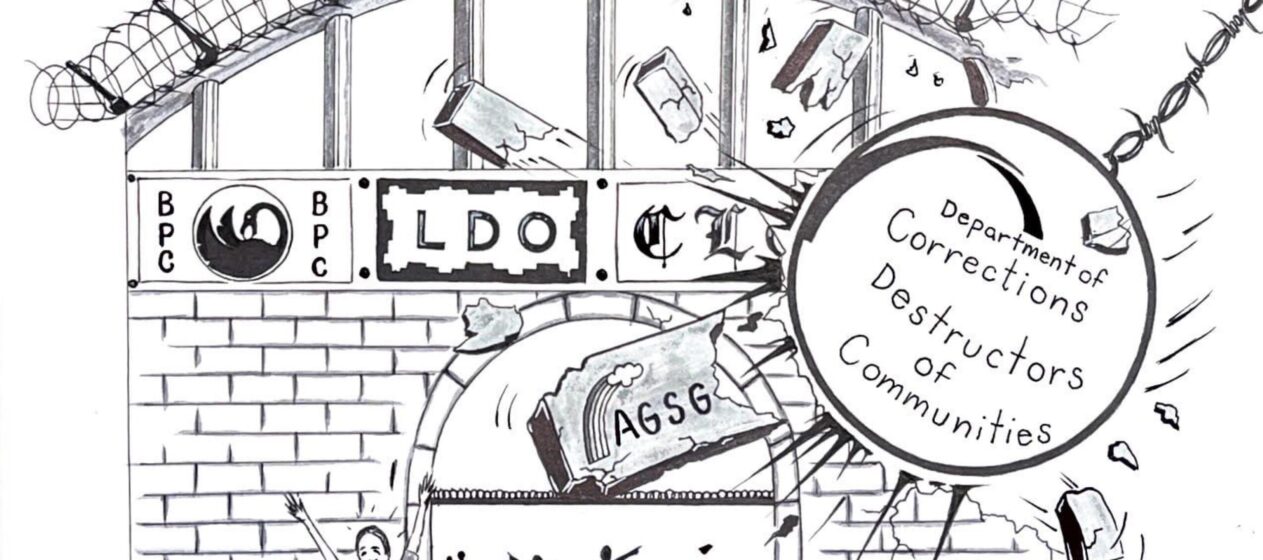




Ah, the confusion that reigns when folks talk about church and state . . . SCOTUS rules in favor of religious freedom on one day, and the next day — the very next day! — religious conservatives come out screaming about the threat to religious freedom.
No one could have anticipated . . .
*sigh*
Earlier this week, the Supreme Court ruled on the case Hosanna-Tabor Evangelical Lutheran Church v EEOC, in which a “called teacher” of the church’s school was fired. The teacher (and EEOC) claimed it was because of alleged medical issues — a reason that would not be allowed under anti-discrimination laws. The church disagreed, saying that the principal and the teacher disagreed on whether she was fit to return, and it got to a point where the teacher said “Fine, I’ll get the courts to enforce my views.” According to the church, going to the courts without first attempting to resolve them within the denomination’s structures is where she went against the teaching of the congregation’s denomination (the conservative Lutheran Church-Missouri Synod) and is what made her unfit to serve as a “called teacher.”
[I put the phrase "called teacher" in quotation marks, because it is a specific theological term central to the discussion. The Lutheran Church Missouri Synod makes a big, big theological distinction between "lay teachers" and "called teachers" and it has nothing to do with what subjects you teach. The idea is that as a called teacher, you are a religious leader with expertise in your particular subject area. You have religious training and official certification of your theological qualifications by the LCMS. You are an official representative to your students and to the community of the congregation and the LCMS. But back to the case at hand . . .]
Chief Justice Roberts framed the issue at hand in the very first paragraph of the opinion of the court in this unanimous case [pdf, p. 6]:
Certain employment discrimination laws authorize employees who have been wrongfully terminated to sue their employers for reinstatement and damages. The question presented is whether the Establishment and Free Exercise Clauses of the First Amendment bar such an action when the employer is a religious group and the employee is one of the group’s ministers.
Period. It’s not about whether religious organizations can ignore any law they don’t like. It’s not about whether employees in religious organizations have rights and protections. First and foremost, this case is about who gets to choose who is a leader in a religious organization: the group, or the government. SCOTUS unanimously — and unsurprisingly — said “the group.”
Imagine the alternative: six Roman Catholics and three Jews deciding who gets to be called a Lutheran minister.
Near the end [pdf p. 26], SCOTUS reaffirmed the limits of this case:
The case before us is an employment discrimination suit brought on behalf of a minister, challenging her church’s decision to fire her. Today we hold only that the ministerial exception bars such a suit.
In the 2012 elections, discussions about the relationship of religious groups and the state are taking an increasingly large role. On Thursday, an open “defense of marriage” letter signed by dozens of conservative religious leaders (including Catholics, Mormons, and Baptists, among others) was released, saying:
. . . we believe the most urgent peril [to religious freedom] is this: forcing or pressuring both individuals and religious organizations—throughout their operations, well beyond religious ceremonies—to treat same-sex sexual conduct as the moral equivalent of marital sexual conduct. There is no doubt that the many people and groups whose moral and religious convictions forbid same-sex sexual conduct will resist the compulsion of the law, and church-state conflicts will result.
In the USCCB press release accompanying the letter, USCCB president (and Cardinal-designate) Timothy Dolan said “Marriage and religious liberty are at a crisis point in the United States. . . The letter makes a compelling argument that needs to be heard by all of us, especially those in positions of authority: anyone truly concerned with religious freedom must also be a defender of marriage’s perennial definition.”
Sorry, Cardinal-designate, but I’m truly concerned with religious freedom, and I disagree 100% with your narrow view of marriage.
As Hosanna-Tabor v EEOC makes clear, religious freedom is alive and well in the US. But what Dolan and Co. are concerned about isn’t their religious freedom, but their freedom to hide behind religion in order to discriminate more broadly in society.
The USCCB hailed the unanimous decision in Hosanna-Tabor, but don’t expect that to slow down the conservative religious attacks on marriage equality and women’s reproductive rights.
photo h/t to elPadawan


20 Comments


Support this site!
Subscribe to the newsletter
Advertise on Firedoglake
Send
us your tips
Make us your homepage
About Firedoglake
For those who want to read the briefs and opinions, and see more background on the case, here’s the SCOTUSblog page on Hosanna-Tabor v EEOC.
You don’t need to be a member of that church, or any other. That an outsider can say what the dictates of a church’s teaching (see the Jew and Catholic deciding Lutheran policy)is absurd. While I agree that same sex unions recognized by the state is valid, only the church has the right to sanctify that action, and if they don’t, well, go elsewhere.
Cherry picking your elements of church credo doesn’t work, which, by the way is the reason I am no longer practicing the faith in which I was raised.
End of story!
I’ve heard one of the wingnuts crying that “Marriage is a sacrament; states cannot offer sacraments.” RIGHT ON! If a sacrament is needed or wanted–get it from your church (if you can). Get your marriage license/civil union (or whatever you want to call this legal contract) from the state.
Another argument I heard is that same-sex unions is a ginormous threat to marriage. I would contend that the greatest threat to marriage is the option of divorce. Let’s see if all those serial monogamist populating our legislature want to outlaw/criminalize divorce. Think that would work?
I generally agree that the courts shouldn’t be imposing themselves into the workings of churches and religious organizations, and this is because I think the modern public sector should regard virtually any engagement at all with religious organizations with dread.
After all, we’re talking about attempting to make legal determinations on the workings of people organized together under the terms of a shared or mass delusion; people who quite frequently make flat-earth arguments about the real world, and who attempt to impose their religious views on the general public and world at large in the form of official policies and laws.
What the public courts should be doing is firewalling modern society against the regular incursions by the faithful.
Thanks for explaining this decision, peterr.
As for “marriage equality,” I wish that people would distinguish between a church’s “religious marriage” and the state’s “marriage contract/license.” Gender should not be a criteria for entering into a state-licensed marriage contract that confers rights that aren’t available without the license.
karen
Agree with sixgill – firewall their azzes.
They said the same thing about interracial marriage. And like that, I think the state should should assign the marriage license. Fuck the church and all organized religions. They’re all con-men looking for tax-free handouts.
Let them have their mass delusion. And let the rest of society move on without them.
You realize that you’re talking about me as well as folks like Dolan, right?
I’d appreciate it if you’d put down the broad brush when you talk about “the church” and “all religions.”
My sister married a Quaker in England. They had a Quaker service, and while the rest of us repaired to the reception hall for vegan cake and other remarkable goodies, they went to an office in the building and complied with English law for a civil wedding. England doesn’t recognize weddings performed by Quakers, apparently.
That’s uncommon. Ministers are generally allowed to conduct marriages.
Do Quakers actually have ordained ministers? I seem to remember they do not.
If everyone would just become a quakerite islamic mormon buddhist, all this stuff would cease to be a problem. We would have a peaceful, sharia- governed polygamous society, where everyone meditated and hated each other equally. Isn’t that what god wants?
This is all horse puckey.
and why do we want sharia law? I mean really? Religious law of most organized religions is pretty antiquated and draconian. Better to confine them to their sphere and have secular law, thank you. The Dalai Lama once said that the greatest gift of the West was separation of church and state.
No one could have anticipated . . .
the response of some at FDL
*sigh*
Thanks for a clear write-up of the decision. For as long as I can remember the Roman Catholic Bishops have been determined to stand against the beliefs of 90% of their congregations – as in this usccb note – so as to show how pure they were.
In the beginning the “priest” was the person that lead the group in the prayers and after offerings for the poor were collected, he had the job of walking around giving things away. The Bishops job was to focus folks on spreading the good news. Now we are told how civil government shall make contract law (which is what “marriage” is). They lost some focus along the way, it seems.
I might buy the argument about this being a case involving religious freedom, if I didn’t also know that the teacher was fired after being diagnosed with narcolepsy, which is disabling and incurable and also treatable with drugs. Apparently the church didn’t want to pay for her insurance after that, so they fired her. And she sued them, and they decided that fighting it all the way to the SC was more important than being, you know, actual Christians.
Which, as Slacktivist says, makes them a**holes.
AFAICT, the difference between sharia law and the law our wannabe-theocrats want to impose on us, is the label on the package. Everything else seems to be pretty much the same.
Where did you leave your sense of humor? If you thought I was the least bit serious, you need a new outlook on life. Chill out.
According to the decision, the congregation offered to pay her insurance if she would resign, but she refused.
In medieval times in England, while marriages of nobility were conducted inside churches, for the ordinary people is was treated as wholly a secular affair. The couple could simply say to each other that they were husband and wife. Couples were often married in front of the church because it had the most open space. They didn’t even have to have a priest or witnesses. Then, towards the end of the 12th Century the church “horned in”.
Prolly everyone has left, but let me just throw in a recommendation: it may be time for us to go the way most of Europe has for decades.
Much like the Quaker wedding described above in England, in Germany and France, and AFAIK most of the Western European countries (not sure about Spain and Italy), the legal state-sanctioned marriage is the one performed at the town clerk’s, or similar, office. That’s all you need to be married, but you do need that to be married.
I have a number of European friends who take for granted that you do the civil wedding, then you do the church wedding, which is the one with the white dress and the procession and the big party afterward.
Here, we can do either one. There, if all you do is the church version, you are not married according to the state.
That would take a lot of these arguments off the table.
When I was twenty-something, when I first heard of this, I thought it was terribly unromantic. But my friend, who grew up expecting to do both ceremonies, didn’t at all.
This way, you can be religious or not, and different denominations, or individual priest/ministers/rabbis/imams can choose not to perform a wedding, but as long as you do the civil marriage, that religious choice is irrelevant. Sound good?
Well said. The ‘open letter’ complains that churches are being forced or pressured to treat same-sex relationships in one way or another, and that’s simply not true. I don’t think anyone really gives a fat boloney what churches think about homosexuality. The issue is how the govt views same-sex marriages… and treating them differently than straight marriages is clearly discrimination and therefore unconstitutional.
After all… marriage is primarily a civil contract, not a religious one.
If I may say this as an atheist, “Amen” Peterr!