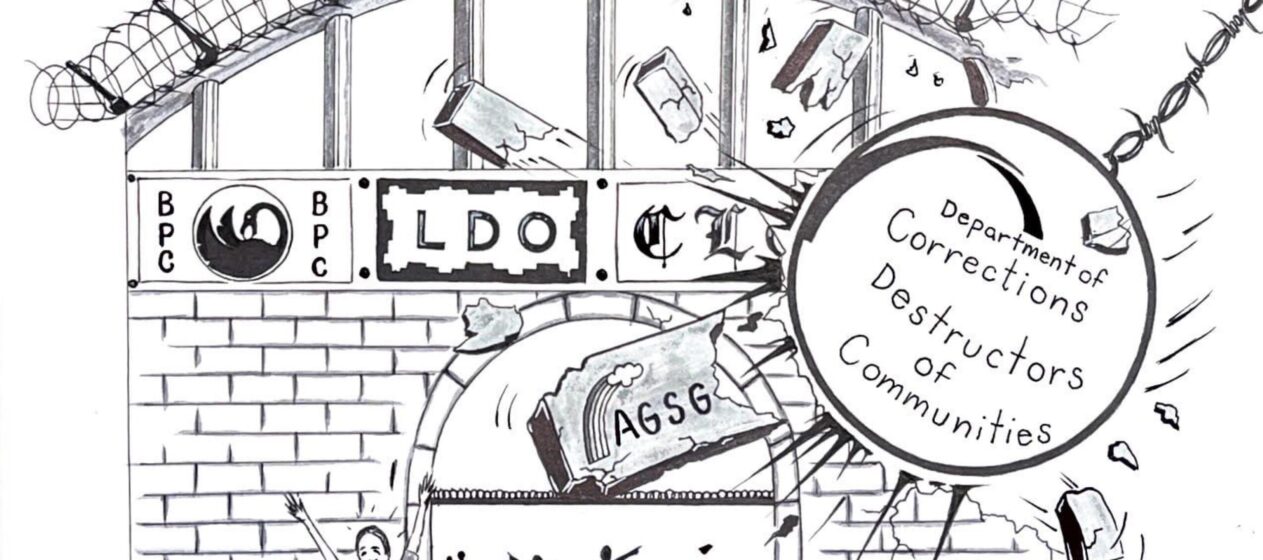



Our system of government is an oligarchy inside a democracy. The system is built on an unspoken bargain:
The rise of representative democracy involved a difficult and delicately executed trade-off of property security for the richest and historically most powerful actors in exchange for universal suffrage for the unpropertied masses.
Oligarchy in the United States?, 7 Perspectives on Politics 731 (2009) by Jeffrey A. Winters and Benjamin I. Page (abstract here, entire paper available from your library, and worth the time it takes to download and read.) Winters and Page point to several provisions of the Constitution that protect the economic power of oligarchs, and to the courts that enforce that protection.
1. Article I, § 10. This section prohibits states from issuing bills of credit, which are IOUs that can take the place of money. It prohibits laws “impairing the Obligation of Contracts”. This clause was intended to keep states from using their powers to relieve their citizens from oppressive terms of contracts.
2. Article 4 § 4 guarantees that each state will have a republican form of government. That should enable the federal government to quash any serious effort to rein in the oligarchs.
3. The Fifth Amendment, made applicable to the states by virtue of the 14th Amendment, prohibits the taking of property without “just compensation”. As the authors note, it isn’t easy to redistribute wealth in the face of this provision.
4. The Senate gives disproportionate votes to small states, including those that are easier for oligarchs to dominate.
5. The Senate controls the appointment of judges. Historically, the courts have been radically protective of property rights.
6. The Constitution intentionally set up a number of veto points. Courts and their endless appeals are additional tools for the oligarchs to stymie governmental action, even action crucial to the 99%.
[cont'd]
I’d add that the Constitution originally allowed slavery, primarily protecting the economic interests of the South. It even let the low-population slave-states count their slaves as 3/5 of a person for census purposes, so they got plenty of members of the House of Representatives. I also note that the oligarchy has historically trampled voting rights of the “unpropertied masses” through fear, poll taxes, voter caging, ID requirements, and many other tactics we see today.
Winters and Page examine several measures of the concentration of wealth in the US that suggest the oligarchy is operating just fine in the US. The trends they describe continue in more recent data. While these numbers strongly suggest the existence of a fusion of oligarchy and democracy, the authors say that the best evidence is case studies. Those case studies aren’t hard to find.
The 1905 Supreme Court case of Lochner v. New York, 198 U.S. 45 (1905), long since overruled, provides a good illustration of the interlocking powers of the Constitution and the Supreme Court to protect the property rights of the rich. New York passed a law that limited the hours of bakeries to force their employees to work more that 60 hours a week. The majority held this statute unconstitutional. It interfered with the constitutionally guaranteed liberty of a baker to contract for the sale of his time and effort, said Justice Peckham.
Dissenting in Lockner, Justice Oliver Wendell Holmes wrote:
But a Constitution is not intended to embody a particular economic theory, whether of paternalism and the organic relation of the citizen to the state or of laissez faire.
…
I think that the word ‘liberty,’ in the 14th Amendment, is perverted when it is held to prevent the natural outcome of a dominant opinion, unless it can be said that a rational and fair man necessarily would admit that the statute proposed would infringe fundamental principles as they have been understood by the traditions of our people and our law.
Holmes argued that in economic matters states should be allowed to enact legislation enforcing the dominant opinion except in rare cases. Holmes’ view might be thought to have won the day. There are few defenders of Peckham’s almost unbridled “liberty to enter contract” theory. But Peckham has his defenders, including Professor James Ely of Vanderbilt University Law School. In one paper Ely writes
In short, the Holmes dissent in Lochner offers a misleading account of the relationship between the Constitution and the political economy. Even if the Constitution does not endorse particular theories, it assigns a high value to property and contractual rights.
In another, he says:
…so long as courts persist in a substantive reading of the due process guarantee — a propensity that shows no sign of abating — it is impossible to escape the legacy of Rufus W. Peckham.
To the extent Ely means that substantive due process applies to economic liberty, he agrees with the authors of the Oligarchy paper that the Constitution and the Supreme Court continue to enforce the bargain allowing an oligarchy to determine economic policy inside our putative democracy.


31 Comments


Support this site!
Subscribe to the newsletter
Advertise on Firedoglake
Send
us your tips
Make us your homepage
About Firedoglake
I’ve long contended the HCRA’s individual mandate is unconstitutional. Use of a state or federal tax code to levy a punitive penalty for failing to have health insurance is patently unconstitutional. It violate enumerated protections designed for human beings from the abuse of government power used on behalf of corporations who buy law with the money extracted from the governed. Servitude, under the color of law, via a bought tax code?
Good read. I’m hardly surprised at the conclusions given our very consciously mixed constitution but the analysis is pretty scintillating. Economic policy is what the oligarchic component of such constitutions delivered to the propertied classes literally all the way back to some Greek city states and of course, republican Rome. We all know the foundy-father guys had them some mancrushes on republican Romans…
Gore Vidal, in his book “Imperial America” (2004), explains that the USA has never been ruled by anyone other than the oligarchs since its inception and that the democratic part of the republic is an illusion designed to pacify the masses. He’s very perceptive in his analysis.
Completely agree. Seems wrong, but I’m guessing 0′s team vetted it out as passable to the supremes before putting the torpedo in the water.
Any Democracy is going to have tendencies to become or act like an Oligarchy and Americans have lived with and basically put up with this boom/bust economy of the Oligarchy since 1797. Now, however; look what is happening with communication by and for the masses, it is a game changer. How will the present PTB respond to this. If OWS was around in 2003 would there have been an Iraq War? I am very hopeful that this is the beginning of another enlightenment of humanity. (I also believe that Humans are basically good so you can discredit me for that) Truth to power (intentionally lowercase p)
And we should have a government that can take property — your house or small business for instance — without compensating it you for it? (Homes and small businesses are by far the most frequent targets for emminent domain acquisition so that the land can be given to more profitable entities, thanks to the infamous Kelo decision.)
And what about redistributing wealth through progressive taxation, as was done from the 1930′s through the 1970′s?
@masaccio
Thank you for this post. Of course the constitution was created by a bunch of elitist white men whose primary goal was to protect their class. the legal system makes it even for those with few means to fight, and easier for those who can afford it. The question is where can we go from here and I always come back to this. say we could enact a system that worked for the majority, the one thing we can not change is our fear of being attacked and or killed. Enemies known or unknown are part of our dna, and those with a power have used this to build on and consolidate their power. war has been good for the profiteers and while they may lie about particular threats, so long as a generic threat prevails, the few will always find a way to control the many. Just my thoughts.
The just compensation provision is generally reasonable, but I can think of situations to the contrary. Consider the recent decision on Monsanto seeds. Essentially the court says that Monsanto has a permanent claim against any seeds infiltrated with the anti-roundup gene. Suppose the Congress tried to pass a law changing that rule. Wouldn’t that be a taking? I can think of other cases too.
In light of Kelo, it isn’t clear that the provision protects small landowners anyway, is it?
You can debate that from now until doomsday. BUt, our government is imminently fixable with just TWO changes:
Campaign finance reform and Term limits. Without those two things, nowadays, and with the assistsance of the SCOTUS, government is “for sale” to the highest bidder.
If, indeed, the world ends next Thursday….never mind.
In America the problem has mostly been “If good men will not come to the service of their Country, others will” John Adams. Good people need to accept political posts and offices. We need to elevate the service and minimize the financial benefits of serving a Democracy.
masaccio:
Funny you should bring up Lochner, as it had a recent defender in the form of George Will:
http://www.washingtonpost.com/opinions/why-liberals-fear-the-lochner-decision/2011/09/06/gIQAZapUAK_story.html
Never underestimate how reactionary they are.
Part of the solution is to raise the cost of every method of cheating people, including inciting fear. That means rules with teeth, regulators with the fire in the belly to stay on top of them and indict as necessary, and ways of inflicting immediate damage on bad people.
Fight the Oligarchy with State Banks.
99ers.
Here is what you need to be demanding as your one big start as THE demand of the people. This ONe thing will give you most all being asked for. It will force the Dems to chose sides and show their true colors as well.
State Banks
http://www.youtube.com/watch?v=r0rJWnRFUJA
North Dakota has a state bank . It is not in debt. Its people are protected from foreclosure. Its private farms are protected from Big Ag. They have jobs and no real unemployment.
This is a clear answer and it it THE ANSWER to address a huge chunk of our demands.
If the Dems endorse OWS, let them prove it by awarding all the remaining 49 states State Bank Charters and helping them to get them going. If they refuse, the party should be abolished and sent to sit with the Repubs.
http://www.youtube.com/watch?v=ad0gant1zeo
http://finance.yahoo.com/family-home/article/112420/why-north-dakota-may-be-best-state-in-country-to-live-in
I don’t agree. Right now the number of people who get it, who understand the system, who have figured out why we are losing and who care enough to do anything, is not great enough to overcome the fears artfully stoked, as mswinkle says, by the oligarchy.
The value of OWS is that it is a space for learning, for teaching, and for internalizing a new way to see the world. I think that should include an understanding of the nature of oligarchy, because the language is important both to understanding and to acting.
The good news is that states can create their own charters by simple legislation and fund them sufficiently to meet the requirements for FDIC insurance, without which they will fail.
This post is illuminating. It was hard to believe at first, but they want to return us to the Guilded Age. We all thought they just wanted to get rid of the New Deal, but when these tools go around agitating to abolish amendments 16 and 17, it’s pretty clear they’re agitating for the unfettered oligarchy of that period. Nixing 13-15 will be the next phase.
Agree, perhaps we could also start teaching civics in school again.
Howard Zinn says the same thing. America was never for us.
Following 700 prior years of precedent of property rights protection in the UK.
With over 140 hanging offenses (mostly property offenses) on the books in the 18th century.
have to agree with you. When I first started talking about govt puppets, controlled media etc, i was routinely met with sighs or go and live in china. I take heart from the fact that those type of reactions are less frequent and more people are starting to see through the lies. I pray we will reach the 100th monkey and when that happens change will happen. I hope we do not look at our current system and think of ways to fix it, but have the courage and ability to think outside it, and discover what we want and how we can create that
What about redistributing wealth by excessive charges for items which should be the commons? (Health care).
This door swings both ways.
agreed and that applies to many other things.
Good observation. I had a couple of paragraphs on this in earlier drafts, and I appreciate your mention of this important fact.
Article II,Section 1 establishing the Electoral College is also a key to the oligarchs maintaining power. It, for all practical purposes, imposes a 2 party system.
Our Constitution is a peculiar document initially designed to protect our peculiar institution. It worked. Slavery was not ended through legislation and basic civil rights legislation for African-Americans was not passed into law until the 1960s. It continues to work to protect the oligarchy.
Did any judge consider that being forced by necessity to accept the employment terms of the business owner who holds all the cards, “take it or leave it”, is not really entering into a contract?
No. I wonder if any of the lawyers made the point.
How about having a Constitutional Convention to modernize and fix the Constitution?
There are those oligarchs mentioned today, who are old dead fogies which can be put to bed, and then pieces like today’s would be unnecessary or even irrelevant.
The answer would be a stern “no.” A new convention’s purpose would unavoidably become to distill out the troublesome broadness which allows most any agenda to be backed into the text as it is, while in the guise of a finding or decision, and after a respectable time has passed for deliberation and credibility.
A new convention’s result would simply replace the old oligarchs with new ones who are fashionable today but just as sly. We’d arm the newbies with a much more powerful weapon than what was in force before. No thanks.
Fortunately imperfect humans are still in control at SCOTUS, but maybe there should be more than nine of them nowadays. We should prefer them over the notion of a better defined modern constitution or even any more amendments to the old one.
If this is a bogus position, then should we go in the opposite direction entirely and have national referenda which are easily invoked and nearly impossible to override? Mob rule can be efficient in settling things once and for all.
Exactly.
You describe our situation perfectly, which is why I council extreme patience as concerns goals, demands, etc…
We benefit immensely from the education that the occupiers are recieving through this experience, and the public is being schooled at the same time by witnessing what real democracy looks like at a grass-roots level, including all the difficulties.
Isn’t this the ‘logic’ being used to attack child-labor laws?
The constitution sets up a system of government to the highest bidders through elections. If we got rid of the Senate and elections and replaced them with a legislature of randomly selected representatives serving one term of some number of years (four?), then that would go much further than the system we have to give power to the people in a broad-based, diversified way.
Yes, but also a matter of ‘Family Values’ don’t you know.
The PTB also argued that times were tough, and families needed all the help they could get, and the kids wanted to help out, and there were generous philanthropists willing to pay kids for doing next to nothing from before dawn until after dusk to keep them out of trouble and all, and it isn’t any of the governments’ business is it …
… and did I mention these employers are important, people, philanthropists even?