

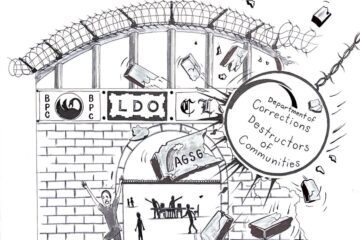
It's just paperwork, nothing to see here, move along. (photo: HB Art via Flickr)
The administration and the banks want you to believe that there is nothing more to foreclosure fraud than just mere paperwork. I point out here that the false affidavits and rocket dockets can rob people of their legal rights. But that was just the first grade primer. When home mortgages are securitized, a whole new level of legal rights and duties are set up that go far beyond the minimal requirements of the Uniform Commercial Code. The interaction of these rights and duties make it difficult to determine who is entitled to enforce securitized mortgage notes.
I am grateful to Yves Smith for introducing me to this set of issues.
Introduction
We will be looking at a specific securitization, that of GSAMP Trust 2007-NC1, which we will call the Trust. The letters stand for Goldman Sachs Alternative Mortgage Product, and New Century, the giant mortgage originator that collapsed into bankruptcy with an array of fraud claims. The Trust is governed by a Pooling and Servicing Agreement, the PSA, which is here. There are seven parties to the PSA, and the rights and duties of each are described in excruciating detail.
The basic idea of the PSA is that New Century will transfer a specific group of promissory notes secured by residential mortgages to the Trust. The Trust is a special purpose vehicle created for the limited purpose of holding the mortgage loans. It sells debt securities, bonds, to investors. The bonds will be paid solely from the payments made on the mortgage loans. The PSA describes the bonds and how the Trust is to pay out the money it receives. This is the slicing and dicing part of the creation of real estate backed mortgage securities.
First let’s look at some of the critical legal and practical requirements for the Trust. Then we will look at the ramifications of what the banks say is just problem paperwork that needs a few tweaks.
REMIC
The Trust will receive income from the interest on the promissory notes, and possibly other income. It is crucial to investors that the Trust is not liable for federal or state income taxes. Internal Revenue Code § 860A creates special rules for Real Estate Mortgage Investment Conduit, or REMIC. If the Trust qualifies, it will not be taxed on its income. The PSA contains provisions that, if complied with, should enable the Trust to qualify as a REMIC. That makes compliance with the REMIC requirements essential for the Trust. . . .
Accounting Rules
The FDIC has rules on accounting for banks, and specifically for the calculation of their net capital. It is crucial to a bank that it sell all of its interest in the mortgage loans with no possibility that the Trust could make it buy them back. If it doesn’t, it will have to show a liability for the possibility that it might have to buy back the mortgage loans. General accounting rules also require a complete disposition to count as a sale. The PSA contains provisions which attempt to insure that New Century is selling with no possibility that it will have to buy back the mortgage loans. See, for example, § 12.04.
Bankruptcy Remoteness
All parties want to insure that if one of them or the Trust files bankruptcy, it won’t affect any of the other parties. This is called bankruptcy remoteness. The PSA contains provisions that should insure bankruptcy remoteness.
New York Trust Law
The PSA says that the parties choose to be governed by the laws of the State of New York. § 12.03. New York law governing the operation of trusts and the actions of trustees applies to the PSA. That law is detailed, and well-developed through case law. Speaking very generally, a trustee has only the authority granted by the instruments creating the trust. In our case, the Trustee is LaSalle Bank, which is now owned by Bank of America. LaSalle Bank has no discretion to disregard the provisions of the PSA, and is not allowed to act contrary to the PSA.
The duties of the Trustee are enumerated in § 8.01, along with exculpatory provisions. The main provision is in subsection (a):
(a) the duties and obligations of the Trustee shall be determined solely by the express provisions of this Agreement, the Trustee shall not be liable except for the performance of the duties and obligations specifically set forth in this Agreement, no implied covenants or obligations shall be read into this Agreement against the Trustee, ….
PSA Requirements for Delivery of Mortgage Loans
The PSA is quite specific about the mortgage loans that go into the Trust. § 2.01 goes into great detail about the documents that must be delivered and the form they must take. Here is an example from §2.01(b)(i), which requires delivery of:
(i) the original Mortgage Note (except for up to 1.00% of the Mortgage Notes for which there is a lost note affidavit and a copy of the Mortgage Note) bearing all intervening endorsements, endorsed “Pay to the order of _________, without recourse” and signed in the name of the last endorsee. To the extent that there is no room on the face of the Mortgage Notes for endorsements, the endorsement may be contained on an allonge unless the Trustee (and Custodian) is advised by the Responsible Party that state law does not so allow. If the Mortgage Loan was acquired by the Responsible Party in a merger, the endorsement must be by “[last endorsee], successor by merger to [name of predecessor]“. If the Mortgage Loan was acquired or originated by the last endorsee while doing business under another name, the endorsement must be by “[last endorsee], formerly known as [previous name]“;….
§ 2.01 explains in similar detail the other documents, including the mortgage itself, which must be delivered, and the forms they must have.
These complex provisions are crucial deal points. They are all necessary to achieve REMIC status, bankruptcy remoteness, and outright sale. They are not discretionary with the Trustee.
Who Can Enforce The Note?
If the Trustee has possession (through a custodian) of a promissory note that meets all of the requirements of § 2.01, then the Trustee is the holder and is entitled to enforce the note and to foreclose on the mortgage.
What about a note that is not properly indorsed? The transfer of a promissory note is governed by UCC § 3-203:
(a) An instrument is transferred when it is delivered by a person other than its issuer for the purpose of giving to the person receiving delivery the right to enforce the instrument.
In the case of an improperly indorsed note, there was no transfer, because the PSA does not allow the Trustee to accept delivery of a promissory note that does not meet its requirements. If the note has not been effectively transferred, the Trustee has no rights in it, and cannot enforce it.
Whether or not this comports with the UCC is irrelevant, because the UCC permits parties to contract for more restrictive terms than those in the UCC itself. UCC § 1-302. The PSA contains more restrictive terms regarding indorsement and delivery than those of the UCC, and terms of the PSA are enforceable.
It isn’t clear that this can be fixed by getting the missing indorsements, because the time specified for the closing of the transfers has long since passed. A further problem arises when the originator of the mortgage is out of business.
This is an opportunity for the homeowner, certainly. It also matters to the investor. If the note has not been properly transferred, the Trust might lose its status as a REMIC. It matters to New Century (or it would if New Century was still around) because it might create a liability to take back the mortgage loan. It matters to the IRS, which has to figure out whether the Trust owes taxes. It also matters to the Trustee of the Trust, which may have violated the PSA.
Who can enforce an improperly indorsed note? Good question. This will clog up courts for a long time.
Conclusion
The Administration and the banks and all the other players in the securitization game want us to look ahead, and not back at this disaster. Investors and homeowners should adjust their rear view mirrors and take a careful look at every single document.


50 Comments


Support this site!
Subscribe to the newsletter
Advertise on Firedoglake
Send
us your tips
Make us your homepage
About Firedoglake
Minor errors….easily corrected.
Yeah, very much like how Dillenger kept forgetting to fill out those withdrawal slips at the bank…
It is only minor if you can get everyone to agree to give up their legally enforceable rights.
Thanks, masaccio. When you can write it up so a dim bulb like me can understand you have accomplished a great deal. Thanks again.
Wheeee! The big shitpile now with snakes eating snakes as a sideshow! I can vaguely follow this, at least as far to say this is a litigation nightmare. Can’t wait for Santelli clones begging the kenyan Usurper to hold their hands while they cross the street, ie, more regulation.
And to think I’m in the process of buying property right now.
Great job.
I love how B of A is claiming that the problems in their paperwork are “misspellings”.
No, the problems with the banksters (not just B of A, all of them)paperwork is that 1/2 if is never existed, which is why they are trying to forge it now.
thanks masaccio
uh mah gawd, from Bernanke’s, um, prepared remarks this morning:
Link
MORE, MORE, MORE …how’d you like it, how’d you like it …
From NPR last weekend:
LOL!!! I love it !! :)
btw, while reading Bernanke’s remarks, couldn’t help but channel my inner EW, wondering if Ben’s narrative matches Donovan’s and other WH efforts at spin
guess we’ll see
I LOVE how the Administration refuses to acknowledge the issue, and keeps using the
language to give themselves an out. I’ve got a feeling that (after the midterms, of course) they’re going to say “it’s not a systematic problem, just an issue here and there with a few servicers. Move along, nothing to see here.”
Corksuckers.
That’s right and they’re doing it all in plain view aren’t they? They want everyone to see that the law means nothing to them and it only applies to us when push comes to shove. As for Barry, we already know he’ll do whatever his masters tell him to do, or else. Don’t however get caught smoking a joint in parts of this country or you’ll do 20 yrs. at hard labor. Steal trillions destroy the economy NP.
WARNING! Objects in mirror appear smaller than reality.
Good advice, go check your documents, very carefully. Go to where you originally closed the mortgage and follow the chain up as far as you can see!
Also, on the investment end you may wish to read up on REIT’s. They are the real estate investment trust groups that orignally held investments before the TBTF changed the game plan.
actually, his use of the term “systematic” caught my attention – remember, the key term in the Resolution Authority is “systemic”
Great quote: I wonder if those “proper procedures” Bernanke takes so seriously include the steps taken to form of billions of dollars in real estate backed mortgage securities and other collateralized debt obligations.
Seriously! I’ve been watching this and have come to the conclusion that the only way the TBTF can come out of this clean is to deem all mortgages paid in full. I really believe it is the best thing to do and will remove it all from their books and will kick start the economy again.
Of course it is! It doesn’t affect THEM, therefore, no problem, right?
Of which we have paid for three times in shoring up the banks! I’m sick to death of it. We have allowed them to swindle enough money. It’s time to call a halt to it and stop it NOW!
Thanks, this is good info and I learned something.
One part that needs to be integrated is the claim made in legal documents that the MERS database system did not require assignments of mortgages to be registered, even in their own opaque, off-the-books database. Since there was no public registration of assignments I consider it likely that the same property is held by multiple funds.
In other words it is like a gold fund that holds $1M in gold bars but sells $5M worth of obgligations. As long as most people don’t withdraw the funds everything is OK.
Somewhere around %1 of all houses in the US are in forclosure (compared to about %.5 in recent times.) When so many of that small number of deals have horrific paperwork problems it indicates a much wider problem.
However, while it may feel good to grab popcorn and cheer on the destruction of the financial industry it is not good news for anybody who happens to have money. The supposedly ultra-safe and conservative money market funds hold large amounts of mortgage-backed securities (at least the ones that I am in do; read the paperwork.) When these things lose money it means that the account that your employer uses to make payroll loses money. There will be less cheering, then.
They want it both ways and they don’t care what the law says. I watched some total asshole from some Mortgage association talking about this topic last nite on the Reich wing Huckabee hr. I never watch this klown but I was intrigued to hear how this conversation went down so I listened for a few mins. It was predictable. Huck made like a populist worried about the poor homeowners and then allowed the Mortgage shark to savage these same folks as losers who deserve to be tossed no matter how they were roped into fraud and are now being fraudulently divested as well . His whole rant was about how these deadbeats had already been living in these houses for way to long and it was all just a matter of some paper work no big deal and then he launched into a tirade about how it’s all the Dims. doing and started in 1977 no less. As for the law , he had nothing to say about the law. It was obvious his attitude was like the bandits in “The Treasure of the Sierra Madre.” “Badges? We don’t need no friggin Badges Gringo!!”
Margaret, it doesn’t really effect them, aside from a little loss on their investments. The rest of us are being booted from our homes, having the values in communities go down from all the foreclosures, and homes are left empty to deteriorate.
you have tweetage :D
I’m hip. Until they start losing enormous wads of money, it’s just a “paperwork” issue and not worth looking into. After all, only the little people are losing their homes and really, how dare they think for an instant that they were entitled to the American dream. They’re not ruling caste! They’re just supposed to cheer.
Absolutely love your photos cbl. I could hang with you guys. :)
but wait, there’s more ….
Denninger beat me to it, but even I can spot the glaring omissions here:
no mention of the frauds, no mention of supervisory authority, no mention of removal of those who committed these frauds and no mention of redress for those who got asset-stripped
17 Papers though :D
ARM-aegettiton!
trust me, we would love that !
So do you think his use of “systematic” is to purposely avoid using “systemic”, or to derail the conversation by introducing new language?
Also, on a more general note, if some mortgages weren’t technically owned by the Trust because of improper documentation, then the original mortgage issuer still owns the note, right?
What happens if the original mortgage issuer collapsed over the last two years? Who owns that note now?
David Dayen has a fresh cross-post ready: New Emphasis for Cat Food Commission?
What I coincidence! I usually use about 17 papers to wipe my ass :)
Good point. The assignment of MERS mortgages is covered by the PSA. From section 2.01:
There are a number of related provisions. The PSA also requires the delivery of a loan file, which is described in Exhibit M. The parties assume that the conditions applicable to REMICs are met by dealings with MERS.
As you say, the lack of any public registration in a central office makes it perfectly possible that the same mortgage loan was assigned to more than one buyer. The records of MERS are indeed opaque to the public. There isn’t any reason to suppose that they are maintained properly, given what we know about the enormous efforts all of the players made to cut costs.
I don’t know, just that the little hairs on the back of my neck went up when I read “systematic”
Here is my personal Mortgage vs Note primer
use the Control F thingy and start at:
“Before mortgage-backed securities…
This is a really hard question, which explains why I conclude with the unsatisfying “litigation coming”phrasing. Among the issues, the PSA gives the Trust a security interest in mortgage loans for which there is some transfer problem. That might be interpreted in different ways. These securitizers opened the door to complicated lawsuits.
I think I would too. You look just like most of my best friends. Hippies who never lost the vision. :)
Speaking of which, shortly before Bush declared war on Iraq, I phoned my broker to tell him that I wanted to make the portfolio more conservative (it was then 100 percent equities). The result was a substantial investment in mortgage back securities (guaranteed by Fannie Mae). I lost a very big bundle on that gambit, and I’m sure I’m not the only one. We were at the end of the food change; the little guys left holding the bag. It isn’t just the homeowners who’ve been screwed by the banks.
There is a solution to this problem. If the interest rates on all mortgages were set at say 5% in exchange for a re-do on the mortgage paperwork. Plus, it needs to be extended to those current on their mortgages in terms of fairness. It would save the courts a bundle of time, and the banks would just have to pay for the paperwork.
What actually happened can be described in the precise language of a criminal ring:
– The [companies that produced sub-prime mortgages] were, in effect, counterfeiters. They produced documents that resembled mortgages but which were known, by those who made them, to be fakes – destined either to be renegotiated or to default. An entire underworld lexicon described this craft: liars’ loans, NINJA loans (no income, no job or assets), neutron loans (that would destroy the people but leave the buildings intact), toxic waste. This fact alone reveals clearly that the participants knew what they were about.”
BofA does not own these mortgages;we the taxpayers do! The ^ trillion of buy-ups of these toxic mortgages by the US Treasury and the 18 trillion dollar guaranteed backing of all these fraudulent These banksters have been bailed out from this FRAUD at least 3 times over already and they can still claim ownership of these foreclosures?
NO JUSTICE DEPARTMENT=NO PEACE!!!!!!!
And…
Guess that answers THAT question.
I have found links to the MERS training documents. Given that the system was designed by EDS, the same people who have brought you several other noteworthy computer disasters (http://www.computing.co.uk/computing/news/2146441/eds-pay-hmrc-tax-credits-fiasco) I am in a frame of mind to be a bit skeptical of their database.
Sometimes you can tell a lot from the reports that are generated. A few that caught my eye:
This is a report to catch properties that were both sold to government agencies (like Fanny Mae) and to private investors. In a well-designed system this should not even be possible, so the mere existance of this report indicates serious data quality problems. (I’m a database guy and lets just say that I have been there…)
This one is self-explanatory. This indicates notes being sold to non-existent entities as when people make up numbers. If the number doesn’t exist the db can catch it, if the number happens to be real…? No halfway decent database system should allow garbage ids to be entered.
I include this to highlight that in the MERS system it is apparently optional for loan transfer notices to even be generated to the entities. In other words it is likely that there is no paper trail. I can’t tell from the training docs how common that was, but even a few missing transfers messes up the whole instrument. I think that some bond funds my have a good case for repurchase.
You can find the source documents (for now!) at http://www.mersinc.org/files/filedownload.aspx?id=313&table=ProductFile
This is a beauty:
Two questions:
1. Ok, that covers the Judicial Foreclosure states (ones with mortgages).
In CA there are no “mortgages.” It’s a non-judicial foreclosure state, with a note, Trust Deed, and three parties to the loan, the mortgagor (lender), the mortgagee and trustor (borrower, with equitable title), and the Trustee (with hypothecated title).
They are not mortgages.
2. “no Assignment of Mortgage in favor of the Trustee will be required to be prepared or delivered”
That makes MERS the Agent (or nominee) for the loan. If an agent, who is the principals, all the holders of the bond tranches? If there is no principal, can MERS be an agent?
This is the kind of fraud that is pretty typical in a bubble. You have a fairly scarce asset (solvent people who pay off home mortgages) and a huge demand (investors looking for safe investements after a stock market meltdeown.) The greater the value and the scarcer the asset the more likly fraud is.
I’m beginning to wonder (and this is a radical “socalist” idea) if we should even have private banks. Perhaps we don’t, anymore. Extreme capitalists such as Greenspan point to the tremendous amount of “value” and “innovation” created by private instututions but I think it is more a matter of “B.S.” and “fraud.”
If there is any lesson that we should take away from this mess and pass to our kids and grandkids it is to [b]stay the heck away from financial advisors[/b]. I used to think that my Grandfather was out of it for having CDs as his riskiest investments but I think there was something to it.
I love your concise explanation. ‘Treasury exchanges real money for counterfeit.’ Beautiful!!
Who is actually processing these foreclosures? Are these law firms or are the banks and MERS, e.g. processing them? I got the impression from reading about Wells Fargo a week or so ago that the banks were drafting the documents and doing the non-judicial foreclosures themselves “in house.” If they are charging an attorney fee for this, there also may be a violation for the unauthorized practice of law by non-lawyers (and corporations.
Mortgage backed securities should just be prohibited. Peoples’ homes should not be lost due to the vagaries of a market subject to speculative swings.
1. In non-judicial foreclosure states, the basic rule is the same as in judicial foreclosure states: only the holder can foreclose. In both settings, the SPV Trust must become the holder of the note in order to conduct a foreclosure.
The biggest difference is that it is usually hard to stop a foreclosure in a deed of trust state, and there is no standard way for a homeowner to find out about holes in the foreclosure proceedings. That means that the problem goes on into the future. It may or may not affect the rights of other parties.
2. MERS supposedly only acts as nominee with respect to the mortgage, not the note. It is supposed to record an assignment at the request of the holder. Given the issues with MERS own records, and the fact that the note can travel without documentation or notice to MERS, it isn’t clear how MERS knows it is acting on the instructions of the true owner, if there is one.
good pt. But of course the banks don’t see it that way. They want all of us including the buyers to handle the losses while they triple dip us and grab the property and re-sell it. There is no end to the greed and avarice of these pricks. To top it off they now require we all accept that even though the paper these deals are printed on is mostly fraudulent as well so what? In other words their saying don’t believe your lying eyes just believe what we say and STFU. Why? because in the end they own the Gov’t now and basically are telling the rest of us to go away.
Even Buffet has been quoted recently as saying the only banking innovation of any worth over the last 20 yrs. are the ATMs.