


Autocrats, plutocrats, authoritarian ideologues and elitists of all stripes speak often of the people’s inability to govern themselves in a complex world that requires expertise – namely, the self-justifying expertise of the elite themselves. With surprising frankness, federal appeals court Judge Richard A. Posner summed up the elite’s paternalistic rationale:
Few citizens have the formidable intellectual and moral capacities (let alone the time) required for the role that [popular democracy] assigns to the citizenry…
The anti-democratic sentiment is hard enough to stomach. But what really galls is the blindness to an indisputable fact of history: it’s the autocrats, plutocrats, dictators, duci, fuhrers, imperial presidents and corporate barons who have lacked the necessary “intellectual and moral capacities” to cope.
Even historically exalted leaders are usually only those who’ve succeeded in cleaning up the messes of their predecessors. And they do it by widening their circle of advisers, sometimes all the way to the people they serve. Franklin Roosevelt comes to mind. The years of his administration saw a major spike in broad government/political engagement and voter turnout.
I’ve been reading historian Miranda Carter’s entertaining new book, George, Nicholas and Wilhelm, about the cousin-emperors (Kaiser Wilhelm II, Czar Nicholas II, and King George V) who helped lead the world into the catastrophe called World War I. Yep, they were cousins. In some ways we can thank the 19th Century’s Queen Victoria for the bloody 20th . She spent most of her time intermarrying mentally infirm members of the royal families throughout Europe and Russia. Her grandson, King George V, even created the name “House of Windsor” out of whole cloth, scrapping the true, pan-European royal name – the House of Saxe-Coburg and Gotha – in a tip of the crown to English nationalist fervor. But blood feuds are thicker than spin.
Carter writes with a novelist’s flair, and it’s hard not to feel a little sympathy for her characters, the overwhelmed and genetically unprepared royal families. Still, they were political idiots.
A good metaphor for the cause of their failings is the disease called porphyria, which plagued George III (you know, the one the American Revolution fought against), and others in the royal families. Porphyria causes peripheral neuropathy– the peripheral nerves can’t communicate to the central nervous system. Political porphyria, then, means the leader is disconnected from the people.
In just the way the biosphere needs diversity, the pluralistic human universe needs nourishment and enrichment from multiple perspectives and diverse views and opinions. In fact, I don’t think it’s a coincidence that the emergence of a new global economic and political elite is accompanied by a loss of biodiversity. Diversity and egalitarian pluralism are what the elite want to overcome.
Porphyriacs can’t feel their feet, and they won’t notice they’ve cut them off until they need to walk.
It’s not lost on the elite that the world is fast approaching the inevitable global Resource Wars. And that means that in America, the real struggle is between democracy and plutocracy, as the plutocrats place as many barriers as possible (voter i.d., secrecy, assaults on privacy, great income disparity and enforced poverty) between the government and the governed. They may not affect a science-fiction escape to another planet, but they might escape to Dubai.
That real struggle, though, is disguised in the same way George V renamed his family the House of Windsor. The genealogy of plutocracy is hidden in the language of democracy. This is most apparent in the approach of cable news to politics. Drape a little red, white and blue bunting on the set, and presto incognito, the plutocrat becomes Thomas Paine.
Advocates of popular democracy ought to have allies among libertarians and some of the more sensible tea partiers. Too often, though, these unhappy actors are not really anti-authority or pro-popular democracy at all. They just want to be in charge.
Nuclear proliferation, global climate change, the wrecking of continents (Africa) and cities (New Orleans), starvation deaths, financial collapse, tragic and bloody warfare, infrastructure decay, the threat of disease pandemic, all of these and more are the responsibility of generations of leaders who argued that the incompetence is the people’s. I guess we ate their homework.
This is why it’s urgent that we move toward authentic popular democracy. Short of the guillotine, we should enact full public finance of campaigns, universal voter registration and election-day holidays, tough privacy laws and strict limits on surveillance and search, etc. Of course, these kinds of things are often ridiculed as “process” issues that don’t capture the emotions and imaginations of voters. We can keep telling ourselves that until, pretty soon, there won’t be any voters at all.
The greatest danger lies in pretending that we have perfected democracy. Richard Nixon and George W. Bush came to power, and voters played a role, to be sure (less so in the case of the Supreme Court appointed Bush). But we ignore the pernicious, democracy-warping influence of big money and media bias and over-simplification at our own peril. Blame is also misplaced when we point the finger at “the people” – the Right’s ongoing blame of 1960s civil rights, anti-war or poverty protestors, for instance – instead of at the Robert McNamaras, Henry Kissingers and other plutocrats.


88 Comments


Support this site!
Subscribe to the newsletter
Advertise on Firedoglake
Send
us your tips
Make us your homepage
About Firedoglake
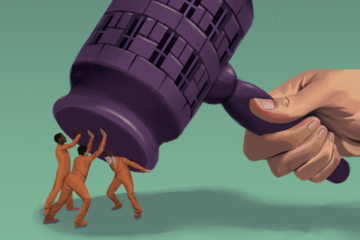
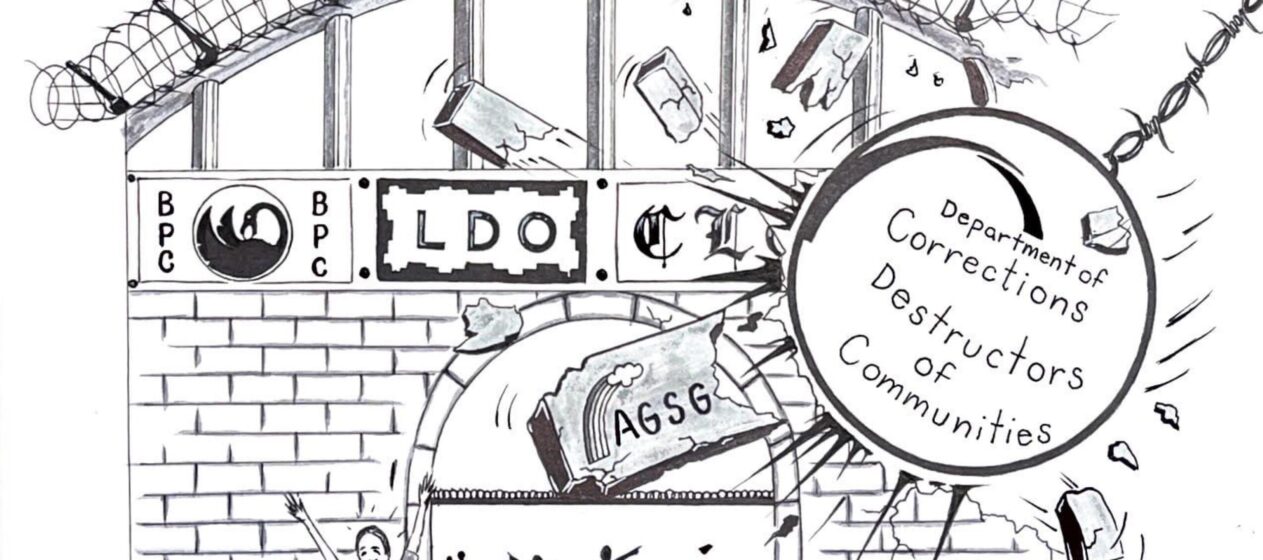
I think the caption is saying, “your burden is no heavier than mine. Look at the taxes I am carrying.” Not sure. Pretty fuzzy and hard to read. The plutocrat is the one speaking the preposterous words.
So .. what’s new and exciting ?
You’ve spelled out the issues well and clearly, but democratic functioning has been on the (accelerating) wane for some time now.
Reasoning with them what holds up change isn’t going to work.
So .. what’s next ?
I think the people will get it, and have done for years. What they don’t have are the resources and time and networking to make individual voices heard as loudly as the corporate. That’s something the Supreme Court justices knew well when they decided Citizens United.
Take something as obvious and simple as a mandatory federal holiday for national elections. Commonplace in Europe, it is as unheard of here as labor laws or a May Day parade. But no one who wakes up to vote when the polls open, no one who spends six or eight hours in a voting line after or before work, would fail to appreciate such rights.
The magic worked by the plutocrats is that such people don’t feel they can obtain such rights here. It’s the same magic that has so many working men and women voting for a party or for officeholders who spend so much time destroying their economic interests.
Maybe this was due to people being pissed off and demanding change. It was in the midst of the depression. Much like today you could say Obama is the new Roosevelt or maybe, I think, that Obama’s replacement is the next Roosevelt.
Are you talking about yourself? Kind of a broad statement don’t you think?
They are kleptocrats. All our elites do anymore is loot. It is all they know how to do. It is also why nothing seems fixable anymore. Looting and functionality do not go together. Our government has become a non-stop con. Our Constitution is invoked but not followed. It has become just a piece of paper to gloss over the deeper thefts. Our social compact is fracturing. The times are out of whack. At some point, someone will make a mistake, or something will happen, and things will either fall apart or explode.
We don’t have an election day holiday because the powers don’t want anything near universal voting. And, as Posner wrote in his opinion in the Indiana voter i.d. case (he said tough luck that the law was harder on Dems than Rs) and in his book (voting is okay to have around, but not an essential right).
I find Posner refreshingly honest, by the way. He’s wrong, of course, but less dangerous than some conservatives because he makes his arguments openly and honestly.
Well said, Mr. Smith.
I’ve been re-reading Anthony Everett’s biography of Cicero, and it’s as if nothing’s really changed. It’s always a war between the pathologically greedy and the rest of us.
After the last time the owners of this country really screwed it up, leaving us in the Great Depression, Roosevelt put a band-aid on it, and it was really only WWII that got us out of it. But for a brief period, the owners were forced to share the wealth, and we had a period of general prosperity unrivalled in history.
But the backlash started immediately and the country has been subjected, by way of plutocratically funded “think tanks” such as the Heritage Foundation, the Hoover Institution, the American Enterprise Institute, and the like, to a relentless barrage of propaganda aimed at rolling back the New Deal. And they are succeeding. Economic disparity and stifled social mobility are at the worst levels since the last Gilded Age, at the end of the 19th century.
The important question, then, is one of how is it that “the people” cede the public will to the plutocrats. Henry Kissinger didn’t commit his crimes all by himself — he had thousands of accomplices.
“Following orders” offers the accomplices a meaningful excuse. It was Eichmann’s excuse for carrying out the Holocaust, remember.
Technology is an additional factor. Once the scientists had developed the nuclear bomb, it only took an airplane to drop the thing on Hiroshima.
Marx’s concept of “capital accumulation” is important here. Once we have an economic system in which the exploitation of the working class through wage labor (and thus through the money system) is a given, we can create rich people with inordinate amounts of power. Bill Gates, for instance, is far more powerful as an individual than any of us individuals here on firedoglake. And rich people can buy inordinate amounts of support from the governing apparatus.
Kees van der Pijl suggests a meaningful concept in the history of power: capitalist discipline. The world has been disciplined to participate in the capitalist system, and so this libertarian notion of “pure capitalism” can be shown as so much malarkey. It doesn’t matter what power the government has, when the people can be whipped into line to support the processes of capital accumulation. Thus Soviet history dovetails nicely with capitalist history, for the Soviet version of “Communism” tried to achieve the worker’s utopia with capitalist discipline, and so merely transformed the state into a corporation.
It’s important, then, to understand the apparatuses through which the plutocrats rule. What was it that Mario Savio said about hindering the operation of the machine?
I like the term kleptocrats! And I really do believe the acceleration of their looting is, at least unconsciously if not consciously, a response to the looming resource wars. It’s a pull up the ladder strategy.
Judge Posner is saying that he possesses “formidable intellectual and moral capacities” which the rest of us lack.
Could be true I suppose, in his case, but he is more likely simply a vain and egotistical POS like say, Alan Greenspan.
This is, of course, painted over by the forces of darkness. It is important to remember. Of course, conservatives believe the civil rights movement and the anti-war movement of the 50s and 60s were dangerous, the result of spoiled kids raised on Dr. Spock with too much money. Middle class prosperity, in other words, is dangerous. Better to have the very wealthy and the very poor.
Posner has been forced by events to reject the fundamentalism of the free markets that he turned into a judicial philosophy. With all due props for intellectual honesty, it seems odd that he would argue that he and people he thinks are his equals themselves “…have the formidable intellectual and moral capacities (let alone the time) required for the role that [popular democracy] assigns to the citizenry…”.
In a real democracy, people don’t have to understand everything. Instead, they elect people whose job it is to select experts and workers to carry out the political objectives of society. A properly managed election gives people several channels for learning about candidates: they can listen to candidates who explain the policies they intend to pursue, and the reasons for those choices; they can listen to people whose opinions they trust to see what those people think best; and they can review the record of action and writing by the candidate, at least we could if we thought they had any integrity.
I don’t want to be governed by philosopher kings like Posner.
Hugh, the global growth rate is nowhere near high enough to satisfy the profitmongers. In fact, actual global economic growth has been slowing down from decade to decade since the 1970s. One can argue that this is a result of neoliberalism — but the hard reality of the matter is that there will be no competing, alternative version of the capitalist system in this era because theft and/or fraud has now become necessary to maintain profits, and no competing form of capitalism will keep the theft and/or fraud going with the same efficiency as neoliberalism.
What puzzles me is that the “information age” was supposed to usher in a new era of informed citizenry, but yet it seems that almost the opposite is happening- propaganda like faux news has become even more effective, and the electorate has segmented to such a degree that a large segment of it now lives Matrix-like 24/7 in the sociopath Karl Rove’s fact free, belief based world. Unfortunately, the same can be said about a portion of the Democratic base who believe the pretty words and empty promises but never pay attention to the policies that are actually enacted. Plutocracy and Kleptocracy are almost the invertible result of such a system.
“masters of the universe”
All true philosophers will be killed by the state.
Okay, that was for dramatic effect. But they will be marginalized (many obscurantists do a good job of facilitating this).
The embodied wisdom of the public will include both deep and shallow thinkers, people who share little more than a common humanity. Soon as someone’s ego lifts them onto an “uncommon” height, they give of something important.
See Max Horkheimer and Theodor Adorno: “The Culture Industry: Enlightenment as Mass Deception.” Written in 1944, and strangely prescient of our whole era.
I’ve read that Arizona has a form of public campaign finance. Fat lot of good that’s done, eh?
Maybe the problem is an exponential growth in information without context, a national story so post-modern it’s worse than worthless. It’s disorienting, and the grand liars of Foxnews etc. are all to happy to reorient us around their dangerous deceptions.
One reason Diane Wood is able occasionally to persuade him to join her view of the law, which is one reason Obama would never put her on the Supreme Court.
In fairness, the conviction that the people are too stupid to make good decisions is not unique to plutocrats and corporatists. It is heard often in progressive circles and is an idea as old as the Republic itself. In politics, anyone who dares to disagree is usually deemed stupid, which means we’ve probably all thought that way, if not talked that way, at one time or another.
Good point. Wood’s too important where she is.
Greater access to information has not lessened the plutocrats’ interest in denying others its benefits or the ability to act on what they now know. It is also a two-edged sword; it has enhanced their ability to obfuscate and obstruct while enhancing the ability of people to know what their corporations and governments do.
Most of the people who I work with and are die-hard rightards look at the Federal Government as the tax collector for the welfare state. They make a good living and work hard at it and resent able bodies living on the dole. They are completely blind and unwilling to recognize corporate welfare.
That’s more medieval than Gilded Age, but it seems accurate.
I agree with you. In fact, progressive paternalism (Prohibition, anyone?) is a terrible problem still. (Rahm, anyone?)
I place a high value on intelligence, and I deeply resent what I call willful ignorance. That’s the glorification of ignorance we see in, say, a show like the Dukes of Hazard. The celebration of ignorance deserves condemnation. But so does prejudice against all non-philosophers. Wisdom emerges from the most unlikely places.
I think you have it right.
It is one thing to think that average people could make a good decision about something complicated that they haven’t studied, say, the best way to do an arteriogram. But average people do have a pretty good idea of what is best for them and what is best for society as a whole. To the extent that they vote in accordance with those views we get the government most of us want.
The problem as I see it is that neither party campaigns honestly, neither has any real intent of carrying out many, if not most, of the principles of their campaigns.
There is a culture of followers in corporate life who believe a company exists solely for them to stuff as much cash into their pockets as possible. They are completely unconcerned with the health and well-being of the corporation, the product or service they provide, or anyone else in the firm. There are many, many vampire squids. Carly Fiorina comes to mind.
Oohh, good stuff Mr. Smith. As one watches the unfolding disaster in the Gulf it becomes clear that corporate power, wedded to political power, has gone wildly out of control. Their ‘we love everyone and every living thing’ commercials not withstanding, energy companies don’t care one wit about the environment, about Americans, about the children(!) or anything but profit. If they unleashed a catastrophe that killed billions they would consider it merely a PR problem, ‘Now there’s more room for all of us!’ I can see it now, that tag line with puppies running across a meadow ’cause, ya know, they really do care.
That welfare thing might have existed in the real world in the 90s, but we don’t do welfare any more, unless you count food stamps.
I think that’s a little harsh. What can be said is the mentality that regulations are a hinderance and should be skirted, manipulated and lobbied against. Just like in the banking industry, regulations are in place to protect them as well, but they just can’t see that. I wrote something about it here.
Until we can find another way to reward production, other than the profit system, we will have this dog eat dog world. I just don’t see another way right now.
The problem is pricing goods because we live in a world of scarcity. Technology may lead us towards an ample amount of goods and that may be the ticket away from the profit system. Until then we just have to survive as species. Hopefully it is not far way. Technology is moving quickly. Look how far energy production has come in the last ten years.
Fantastic article. Shared on Facebook. And I’m making my wife sit down to read it with her morning coffee.
and OilFieldGuy @ 29, Meg Whitman comes to mind, also :(
Many in both parties assume (consciously or unconsciously) that their own status and well-being is necessary for the good of the whole. It’s narcissistic, for sure, and damaging to democracy, and widespread. Really, the game becomes the attaining and maintenance of status. A congress person who put as much effort into the public good as his or her own re-election would be a very rare thing indeed.
Thanks!
Too true, sadly.
To amplify the point, elite control has failed. It always fails because the effort to reach the level of elite requires a disqualifying amorality, at least. You would think the history of failure, universal and without exception, would at least lead some to consider an authentic popular democracy, a democracy with powerfully open institutions to afford maximum advantage from from the wisdom of the public.
Excellent point. As a result of our evolutionary history, if we are overwhelmed with information, we tend to latch on to the pieces that match our existing world view. That is the modus operandi of propaganda- information that reinforces a pre-existing belief.
The question is then, how do you get an informed citizenry who can make the right calls in the face of a steady barrage of deceptive propaganda that is being narrow cast to a receptive audience in order to reinforce the plutocracy?
This immediately brings to mind the “bug or feature ” question.
A good starting place would be to undo Citizens United and the legal theory that money equals speech. Which, obviously, gives those with more money more speech.
Structural changes, which seem so dry and wonkish, could actually help get us started. Full public finance of campaigns, limits on paid advertising, an effort nearly as intensive as the census outreach to get people to the polls on election day….it is a place to start.
Deeper cultural issues — the replacement of news with carnival barker entertainment, the abandonment of the national commitment to public education — also require urgent action.
I’m intrigued, but what is the “bug or feature” question?
Very nice, Glenn. Thomas Jefferson would have taken Posner apart and stamped on the pieces.
Do you think imposing a nationwide, top to bottom, one term limit would solve some of these problems? Force elected officials to just do what they can, towing the party line be damned, and not worry about re-election?
With regard to your response to the paragraph “Even historically exalted leaders are usually only those who’ve….” you are correct in that the people were “pissed off and demanding change” just as the people are doing and feeling today. However, Roosevelt responded to the people’s anger and need for change whereas Obama is responding to Wall Street with the help of Geithner, Summers, Rubin, and Emanual; Obama is responding to the medical and military industrial complexes (to wit: the PhRMA deal, killing the public option, and the rest of the watered down ersatz Health Care Reform); and, Obama is responding to the big pockets who will finance is run for a 2nd term in 2012–We, the people, are ridiculously unimportant. You are also on the right track when opining that Obama’s replacement might be the next Roosevelt; however, we need to be very careful because if we turn to or join with any of those “Advocates of popular democracy [who] ought to have allies among libertarians and some of the more sensible tea partiers….[t]oo often…these unhappy actors are not really anti-authority or pro-popular democracy at all. They just want to be in charge.” We need to turn all politicians and plutocrats on their ears, do whatever we can to destroy their hold on us and our country and recreate an electoral system that actually serves us, on which has actual representatives and not careerists; a system with and through which we can actually speak and be heard. We made a big mistake with Obama. We allowed him to dazzle us with a bunch of false promises. We were all too willing to let him do that after 8 grueling years of emotionally retarded “W” and Torquemada Dick. Now, what do we do and how do we do it. That is OUR challenge and responsibility.
Yes, that’s a step in the right direction!
Well, such a term limit would have to be accompanied by severe restrictions, maybe even the elimination of, paid lobbying. Leaving neophyte electeds at the mercy of professionals (agency bureaucrats as much as corporate lobbyists) is a little frightening.
That said, the professionalization of politics clearly feeds the elite monster, and there’s no doubt that we would be better off with thousands of real Mr. Smiths than with lifelong elected who serve until their toupees rot.
Well said.
This country is a republic not a democracy.
Also, I’m afraid we’re beyond the point where we can do away with the professional politicians. All we can do is impose term limits (if we can ever get it to pass).
I envision a system where all elected officials are paid the average national salary, are limited to one term, and corporate lobbying has been eliminated. A reversal of the Supreme Court’s idiotic decision of this year, allowing companies to spend unlimited funds as “people”. But how can we pull it off?
The only way I see is for someone at the state level to author a petition for legislation, then obtain enough signatures to get it on the ballot. The politicos in charge will throw everything they have against it, but if it flies it may give hope to other states. If we can get every state on board, then cycle through the national officials under the new plan, maybe we could count on them to enact the changes at the federal level.
I love dreaming over Sunday morning coffee.
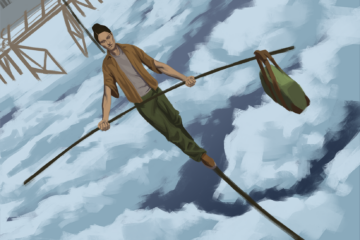
Here is an image that came immediately to my mind when looking at your illustration above, flipped on its head though it may be.
Thanks for a good post.
Yes, it’s a republic, not a direct democracy. We elect representatives and give them the freedom to act on our behalf. In my view, a true popular democracy is achievable within the broad outlines of republican organization. They aren’t mutually exclusive, by any means.
But today’s ruling class depends upon disconnection, not connection, with those they serve. And that can be changed.
That is a beautiful sculpture. Thanks.
“to act on our behalf”. I have heard some in Congress say “I have to vote my conscience.” No, they don’t. They are there to represent the opinions of their district and many don’t do that…. Blanche Lincoln, for one. This needs to stop because it leaves us totally unrepresented.
Luis Jimenez depicts the crossing of his parents to the US, IIRC. I wonder if he had seen the other illustration.
He died in 2006 while working on a large piece for the airport in Denver. The piece had been a tremendous struggle for a variety of reasons. Some large part of the piece was on a hoist which fell on him and crushed him.
He was a spectacular draftsman and a passionate artist who did not glamorize his subjects.
One of my favorite artist is Diego Rivera who painted Mexican “peasants.” Beautiful.
Except when painting himself, I would say Diego had a tendency to idealize his subjects. Also an incredible draftsman, he was truly a great artist.
I have to check out more of his work and life. Thanks so much.
The only measure of success among the elite is their status. For an elected official, that means a “successful” one deserving of the respect of his or her peers is the one who is reelected. Serving the public welfare no longer even makes the list.
When Lincoln says “vote my conscience,” she wants to appear courageous, but it is actually cowardice. “Vote my conscience” means cover my ass with a minority of the electorate perceived to have disproportionate power.
Political porphyria is a wonderful metaphor. It connects with something I have been mulling for quite a while. If you read The Federalist, when it discusses the role of elections, it is clear that it is this malady that elections were designed to address.
There is no moral worth for a decision made by 50% plus one of the population, or more to the point, 50% plus one of our elected representatives, each of whom must win a plurality.
Rather, elections were supposed to ensure that representatives *depended* on the people. By forcing them to seek support on a regular basis, representatives are supposed to learn about the concerns and interest of the people, and bring those back with them to the capital where they can deliberate together.
Instead, our representatives depend on elite support (which public funding can most directly address) and popular support is an afterthought. They live in an elite bubble that makes the interests and concerns of the people unintelligible to them. *Public opinion* is something to be deployed when it is in the interests of the elite, and more often than not is actually a description of views in the Village than in the country. And because of increased inequality, the disconnect between the lives and interests of the people and the elite are great.
While discussing the attributes of porphyria and its relation to the political system, I am not sure if everyone here understands that it is the disease associated with vampires, bloodsucking. The reason people with the disease drape themselves in black and/or only go out at night is because sunlight is poison to their systems. Their skin gets blisters because of the bad reaction to sunlight.
It is inherited.
I assume you see the intense irony in this right? Right?
Why not just do it proper? Replicate the highly-successful, highly-democratic process of popular initiative at the national level? Hell, why not take it a step further by having both a popular initiative system and reforming the function of the existing legislature to act simply as authors rather than deliberators and deciders?
There’s nothing really democratic about popularly selecting unaccountable proxies to act in their self-interest other than you’re using a democratic process to determine the boundaries of your plutocracy. That hardly strikes me as a victory.
I have to admit, it is nice to see Mr. Smith and Mr. Walker digging passed the machinations of D.C. power politics. Keep going.
Good article. You’re right. The very rich have never believed in Democracy. They believe that the only smart guys are rich guys like themselves. This attitude also gives them, in their minds, to stomp on other people because they’re superior. Read their stuff. It’s all right there for you to find.
Posner was almost right. He just didn’t go far enough. In fact, no “citizens have the formidable intellectual and moral capacities (let alone the time) required for the role that [popular democracy] assigns to the citizenry”. The individual’s lack of aptitude for rule is the single strongest argument in favor of democracy that anyone can make.
Monarchy, aristocracy, autoarchy, plutocracy, and oligarchy have such lousey records because they rely on a narrow base od decision makers. Even when society as a whole agrees that they are, in fact, the best and brightest, the chances are that they are not good enough or bright enough. Read honestly, history shows that human life, political and economical, is essentially ruled by chance. Some are lucky. Some are not. The wise recognize that their wisdom has little to do with the difference. A chance universe is a complex universe, where, in any given situation, there are thus an infinite number of possible wrong decisions and only one right one. So having a single Decider or even a handful of them make all the decisions is a recipe for disaster, even if the Decider is as smart as he thinks he is.
In these days of aristocratic post-capitalism neo-liberal oligarchy, we forget that the Enlightenment thinkers that gave us democracy and capitalism had complexity and chance very miuch in mind. In a random environment that no one is smart enough to master, the only way to optimize decision making is to distribute it over the maximum number of decision makers. A democracy is thus the optimal government. A truly free market–free of government favoritism and monopolies, not of regulation–is likewise the way to run an economy. Statistically, a large number of independent political and economic actors will outperform even the best-chosen elite.
Imagine that life is a duel fought blindfolded in a dark closet. You get your choice of weapons. Do you go with the highly accurate, exquisitely balanced target pistol? Or the crude, sawed-off shotgun?
In a real democracy, people don’t elect representatives at all.
I’ve never understood the idea that representative democracy is somehow regularly going to result in democratic outcomes. For one thing, if people are too uneducated, uninformed, unintelligent to comprehend the constructs and ramifications of governance, then they’re no better off in their capacity to select representatives to do so in their stead. That touches on your statement about “integrity.” We all know better that politicians pander to us. They’re trying to win a popularity contest, so why should we expect they’d do anything else? Despite the fact that we know this, we continue to parse their every phrase, and their every action during a campaign as though it’s at all meaningful. Once elected they can do whatever they damn well please, and often do, so why do we continue to bother?
One might as well put two particle-physicists in front of the People, blast out millions of Dollars in advertisements, and then ask them to select which one they think is most likely to discover time-travel.
This pointless middle-ground we’ve developed between democracy and autocracy seems built on layers of justification for the latter while perpetually stifling the will for the former.
It’s a metaphor that keeps on giving. Or sucking.
Thanks, bgrothus.
And, sooner or later, such a system fails. It can’t help but fail. I don’t really like the system-machine analogy, but it is helpful here: the elite’s inputs become entirely self-referential. There is no connection to the earth or the people, just themselves. They’re navigating by their own lights toward their own lights.
Just one of the terrifying things about us having at our fingerprints the possibility of human-caused global catastrophe. Because, ultimately, the catastrophe producing errors will be made.
I wondered if this disconnection from the people is undesired, and something the leader tries to remedy? That would be a bug. Or is it cultivated so the leader isn’t distracted from advancing the goals of some small group? That’s what I was calling a feature. Undesired, or serving a purpose.
Glenn,
Surely you remember Jimenez’s Vaquero in Moody Park on Fulton. It was placed shortly after the 1978 riots at the one-year anniversary of the Houston Police drowning of Jose Campos Torres. A beautiful representation of Luiz’s medium, it is also a strong reference to his cultural heritage. Needless to say, a Mexican cowboy firing a pistol into the air did not go over big at this juncture with the city’s ruling elites. Hardly anything, though, was said about the horse’s glowing “stallion-hood”.
This is it right here. So much elite discourse is more of a performance than an attempted description of reality. Disputing it as fact is just hitting your head against the wall.
Of course, this is why it is so dangerous to allow our own conversations to follow elite discourse.
That’s right out of the Neocon playbook. And if this is truly the problem, then we’d all better get started on improving the quality of public education, so all citizens are able to fulfill their roles properly.
- Tom
I’d forgotten all about it. Of course I remember. Wow. Thanks for the reminder.
I have never thought of it in those terms, and it may be very fruitful to do so. I think, just maybe, that it is both, and that it has to be viewed in the temporal flow to see that. There may be many idealistic people who make their way to positions of influence in order to do good. Their view of the good, however, is soon obscured by the self-referential nature of their peer group. This is a bug, in your terms.
There is, however, no doubt that it is a desired feature of the system by those who, from the start, seek to exploit it.
Because an incredibly expensive, winner-take-all, contest of shameless self-promotion sounds like a set of incentives that would attract idealistic, altruistic, and benevolent people?
Really?
I’ve known some. In any case, I’m really only acknowledging that the system (as you describe it) corrupts.
cake
Hey, Kris –
One problem: I think only something like 19 states allow citizen-sponsored initiatives. The others allow the legislature or Governor to put measures on the ballot, but not the public.
Perhaps the biggest change, the thing that might lead later on to term limits and public financing of campaigns, is a Constitutional amendment giving the right of citizen-sponsored initiatives to all states. The problem with that is, the only way you’re gonna get that amendment offered for ratification is to first convince 34 states to call for a Constitutional convention.
You beginning to see the circular death spiral, chicken-and-the-egg thingy at work here?
That doesn’t mean you can’t pass significant popular reforms in the States that have initiative systems, and we’re sure as hell going to be a lot more likely to influence local politics via national resources than we are D.C. politics, so we could run decent candidates in States that don’t have initiative systems.
Additionally, there is precedent to passing Constitutional Amendments, much more so than there is for stable alternative parties.
The problems are:
a) You can’t pass term limits for Congress (House and Senate) by state action.
b) Constitution has never been amended by state action. Whenever Constitutional Convention resolutions start getting up close to the number needed to for Congress to call a convention, the remaining states all get cold feet. Too much danger of the rabble actually having a say over the political elites. State pressure has led to Congress passing and sending amendments to the states, but that’s as close as it’s come.
c) Run “decent candidates” in states that don’t have initiative systems? I’m all for it; now tell me how we know who the decent candidates are, and how do we keep them from being either marginalized or corrupted by the entrenched Dem party leadership?
I don’t think term limits are really all that useful. They don’t add enough entropy to mitigate capture. Especially considering any replacement will be highly visible during any campaigning process. The only way to maximally mitigate capture is to select politicians by random lottery.
Yep, which is a whole lot closer than 3rd Parties have ever gotten with any consistency. Don’t get me wrong, I’d like to see more diversity in political parties, but again it doesn’t seem like a fundamentally compelling change. It’s a whole lot of really, really hard work for something that can, at best, make marginal rearrangements.
Recruit them, and run them ourselves. I’ve been hoping Jane would make this site more localized for some time now. We don’t have big resources in big national races, but we sure do with respect to key local races. It’d be possible to even get pushes for initiative/prop systems in the States that don’t have them. Lord knows the only thing political elites hate more than the People having say-so; is having to do actual work. If they can outsource their labor to activists while still being allowed to keep their cushy jobs, why not?
I’d note that running candidates ranks really, really far down on my list of preferred strategies, because it’s still a wholly undemocratic crap-shoot for the most part.
It makes a lot more sense to me to start drafting initiative language, and getting them on ballots in the States that allow it. It’d also give us something to do, and to organize around. Getting FDL readers, and other coalition blog readers to hit the streets to get signatures for something substantively useful, rather than some “open letter” or “cause petition.”
Additionally, I’m not saying it wouldn’t be difficult to call a convention, but at the very least it’s plausible, and can facilitate real change rather than just tinkering at the margins. We should be putting pressure there as well. It’s also at least Mathematically possible, whereas a single de facto incumbency party chasing the same core prerogatives is the inevitable outcome of our electoral system, and again; even if that is changed the overall system doesn’t change much.
The purpose of most, if not all, police states is to keep wealth and power in the hands of the few. This is why fascism goes hand in glove with plutocracy. Here in America, our heavily-militarized police force is what’s providing added power and strength to American plutocracy. Police forces across America, thanks mostly to the rise of Homeland Security, are working on behalf of American plutocrats to suppress all forms of political dissent expressed by us plebs, in the workplace as well as in the privacy of our own homes. And Obama is also working on behalf of American plutocrats by seeing to it, among other things, that he appoints a fascist-friendly judge to the Supreme Court.
As I’ve said before, all of us plebs need to wake up to the fact that Obama is such an enemy to our civil liberties and such a friend to our warmongering neocons that he’s a fascist fantasy come true. So we must rise up and rebel against this before Obama and others like him turn out freedom-loving democracy into an oppression-loving police state. Even though most right-wing fascists tend to be social-conservatives who staunchly oppose gay and reproductive rights, most of them will be willing to overlook the possibility that Kagan is a pro-choice, closet lesbian and thus won’t object to her appointment to the Supreme Court. Kagan will also be a fantasy come true for Obama in that she’ll support him in his endeavor to keep all of his ill-gotten, anti-American, unconstitutional powers that he acquired from Bush intact, enabling him to get away with being just as big of a fascist as Bush was!
About the only way for social-conservatives in the Senate to not confirm Kagan is if it comes to light that she isn’t merely gay, but she’s an activist gay who’ll use her power on the Supreme Court to make sure that gays are equal to straights in the eyes of the law. But I’m afraid our plutocrats are much too powerful to let this come to light. From what I’ve read about Elena Kagan and her cozy relationship with the Federalist Society, she can be best described as Joe Lieberman in drag — someone who’ll be a boon for the military/prison-industrial complex. That’s not a pretty sight no matter how you look at it!
Well, the reason they don’t learn and change is that the individuals involved get tolive the high life for a long enought time that it makes sense for them from a purely selfish perspective. Any remedy would have to include severe punitive measures and a clawback of assets. I’m not holding my breath for any institutional move toward those becessary remedies. It would take a pitchfork movement effectuating self-help.
Until we put in place punitive legal sanctions for deliberate massive public dishonesty, the system is actually incentivizing continued deliberate massive public dishonesty.
Distinguish from personal private dishonesty.
Man, I am so sick of hearing that line offered as though it excuses the elected representatives from having any concern for the will of the people. Even in a republic, the purpose of “representatives” is to “represent” the general will and interests of the people who chose them as “representatives.” Sheesh!
Try looking up the definition of “represent,” why don’t you?
Yours is a favorite right wing talking point to justify elected reps who screw the people in favor of the power oligarchy. No more, no less.
An effective public education was always the necessary ingredient for a working democratic model.
I really don’t understand why you think a populist third party is harder to achieve in THIS time and place. I look more to the dynamics currently in play than the overall history, and I sense that the time is right, right now.
And it would mean a general top-down effect that could remediate many issues at once, rather than the piecemeal approach of organizing for individual initiatives.
Yes, indeed, Cynthia, we are all “terrorists” now if we resist the machine in any way.
You say, “rise up.” I agree, but think the big question is, “How, exactly,” with a subsidiary question being, “How can we even discuss the options for rising up under the current guidelines enforced by the Moderators?
‘Tis a conundrum.