

The Obama administration has failed to accomplish much on the horrendous problem of foreclosures of residential houses. The one workable idea, using the Bankruptcy Code to protect homeowners, passed the House and failed in the Senate. Other plans, like HAMP, have done nothing to stem the problem. Now we have the latest proposal. Treasury will give $1.5 billion of TARP money to five of the worst-hit states, California, Florida, Nevada, Arizona and Michigan. I sat in on a call today to hear details from Diana Farrell, Deputy Director of the National Econnomic Council; Herb Allison, Assistant Secretary of the Treasury for Financial Stability; and William Apgar, Housing and Urban Development Senior Advisor for Mortgage Finance.
The Treasury has identified the problem as underwater mortgages, exacerbated by loss of earnings and underwater second mortgages. Underwater second mortgages are a serious problem, because it is almost impossible to get a workable modification to a first mortgage without getting rid of the second mortgage.
This program is designed to get these five states to create innovative programs to solve these problems. The underlying premise is that it is a good idea to encourage people who are underwater to stay in their homes. I asked why this is a good idea. Why should someone who is underwater continue to pay on a mortgage, when they will wind up paying more than the house is currently worth plus interest? Treasury seems to think this is a good idea, because when or if prices return to normal, owners can recover their down payment. That might make sense for some people, for example, people who made large down payments and are having trouble paying because of job loss. However it is irrelevant to people who took out second mortgages equivalent to their down payment, and to people whose down payment was minimal, and to people in areas where it is unlikely that prices will return to anything like bubble levels.
One plausible plan is to see whether states can figure out a way to buy out the second mortgage, so that the owner can pay the first, perhaps with some modification. That would make sense if the value of the home is within striking distance of the first mortgage. It might well help a small group of people. Baby steps are all this administration can accomplish with Congress dead set against the one thing that will work: allowing Federal Judges to modify mortgages in Chapter 13.
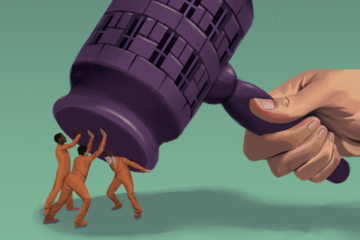
image courtesy Mike Licht NotionsCapital


51 Comments


Support this site!
Subscribe to the newsletter
Advertise on Firedoglake
Send
us your tips
Make us your homepage
About Firedoglake
I understand these states have the most losses but every homeowner in the other states is going to resent this either this program expands to include all states and there might e public pressure to do this or the Dems will lose the angry home owner/ ex home owner vote.
It isn’t going to help people who don’t have any hope of another job that will pay well enough to make the mortgage payments on those inflated values.
What the hell does it take to get this administration to recognize that JOBS are desperately needed?
Does anyone have any better ideas on how to help people stay in their homes?
$1.5 billion of TARP money
First: $1.5 billion in this catastrophe? F-n chump change.
Second. Hows about a little cram-down action, followed by mortgage rewrites, you F-n hacks and ~~~EDITED BY MODERATOR~~~? (Yeah, that means you, Rahm.)
Third: Hows about a REAL stimulus package, with REAL spending on REAL infrastructure assets?
Oh. Almost forgot. That stuff would be way too easy and it would make way too much sense.
F-n Dipshits and Criminals.
~~~ModNote: Can we please not go there?~~~
Am I missing something, or is this like spitting in the ocean?
Real good point how many people are defaulting because they lost their jobs? Have the largest group of people laid off spent their savings yet and are losing their homes or are more expected?
A really big ocean, at that. By my reckoning, it’s a fucking insult.
How many $Trillions in direct subsidies, loan guarantees, and other kinds of commitments have been made to the “financial services” industry?
Worse by giving the money to the states the local politicians are likely to direct the money to help their neighborhood’s real estate values and their supporters. In John McCain’s case how much money would get used?
All of it, but that would just about cover the barbaque sauce.
Cramdowns, mortgage restructures and REAL infrastructure spending…
This ain’t exactly brain surgery.
The headline number is small, but the point became clear: do something about second mortgages, which are the reason so many modifications can’t happen. If something innovative happens, it can be expanded.
One thing people with underwater second mortgages can do is file Chapter 13 and dump the second. If there is no equity in the house for the second (or higher) mortgage, the law already permits the Bankruptcy Court to dump it. Then you dump as much credit card debt and other unsecured debt as you can. If you can pay the first mortgage after dumping a lot of debt, you can keep the house. Still, there isn’t any reason to do that unless you think the house will appreciate in value to the amount of the first mortgage, or it is in a good school district or has some other external value to you.
The problem is that Congress refuses to pass the cramdown. It is the only thing that forces investors and banksters to negotiate.
Its not my area of expertise thats why I asked its good if when we evaluate stuff we have alternatives to compare them too.
I don’t like the plethora of programs: too complicated and the benefit falls unevenly on the populace. Just send everyone checks for 1 grand a month until the imbalances of the last decade are cured with inflation.
Why
~~~ModNote: Can we please not go there?~~~
I call ‘em like I see ‘em. The people at the controls in this disaster really are very stupid, very short-sighted, and unimaginably corrupt. Nor are they called out on it nearly enough for my taste. It’s a very sad state of affairs, indeed.
If trickle down economics worked the banking bailout should have saved the economy by now.
I love the “Produce the Note” movement.
Banks have been caught with their pants down repeatedly and the movement is growing. HTe benefit to the consumer is being able to stay in their homes. Just say “produce the note,” and the sheriff is hoig-tied and hamstrung.
They don’t call the black granite sculpture outside the B of A buiulding in SF “The Banker’s Heart” for nothing.
~~~ModNote: Can we please not go there?~~~
Why not? The enemy is intractable. What else is there? I’m so sick and tired of the “progressive’s” insistence on civil discourse. A year of Obama’s civil discourse has us where we are now.
The time for civility has past. Civility gets you hammered in the ass and nothing more.
I read about this somewhere.
If I recall (and it is possible that I have this mixed up), aren’t some bankruptcy judges in New York state enforcing this, and the result is that mortgages are being torn up and homeowners walk away free and clear, WITH title?
I’m not sure about free and clear, but they can’t be foreclosed by anybody but the holder of the note, and in many cases, that has been impossible to nail down.
We must fight back against the corporatists who would turn us all into serfs again.
Agreed this subject should be explored and front paged.
I say cali has to do something about their tax code before we bail out them out, we’re gonna be bailing them out for tons more if they don’t fix that rediculous code whence it’s impossible to raise funds to pay for their own bills
Don’t know about New York but the Kansas Supreme Court has taken such a step by strictly holding mortgage foreclosers to the letter of the law.
http://foreclosuredefensenationwide.com/?p=159
I wouldn’t be surprised if this catches on. It won’t help everyone but it’s a start.
obama did NOT use “civil discourse”, he’s a corporatist and he’s been manipulated like a mariontte by the very people we put him in office to fight
“Produce The Note” is very interesting. Most people do not understand how this works.
When you pay your mortgage, your paying a servicer. They don’t necessarily hold the note; what they are paid (from my working in the industry in the past) is 1/4 of 1% of the unpaid principle balance on an annual basis.
It used to be that the note was sold to one of the eight big REITs (Real Estate Investment Trusts) who were happy with a frate of return for mortgages. What has happened is that with the repeal of Glass Steagall, now there are TONS of buyers in the second, and now tertiary markets.
So in the past, a servicer could look in the loan file and determine the owner pretty easily. Not true now.
If these CDOs/CDSs are all split amongst buying entities, who DOES have the note? And that’s a legitimate question. It’s certainly not the servicer.
You are correct. However, I believe the time for polite debate, civil discourse and gentle compromise has passed. We mist fight or we’re going to be serfs, living in RVs next to garbage dumps, shooting rats for food.
And that’s exactly how Carly Fiorina and her ilk want us to live.
It isn’t the CA tax code that’s the problem, it’s the sandbox in Sacramento.
this site won’t put up with violent rhetoric, there are quite a few methods for a political fight and we do it through the power of the pen
just like you wouldn’t go to an auto blog and try to convince everyone to buy a jet, leave other arguments for other boards
David Dayen is upstairs!
Feinstein Calls For National Health Insurance Regulator
off to bed, c all mananow (tiz a spanglish word I just made up)
I realize people get emotional about the mortgage subject but it’s really in the best of interests to get wonky with it and understand how it all works, rather than simply railing.
Reset mortgages to market value and if people can afford the resulting payments, they get to stay in their house. It’s the only thing that makes any sense and will force the market to bottom out.
For example: We bought a small house on a big lot in Tucson in 2004. We refinanced and took out a fairly modest amount of money; we used that to build a second house. So now we have two houses and twice the square footage we started with. But we’re still underwater. My husband’s in construction and there are no jobs; we can pay the mortgage now but we might not be able to six months from now. We put the property on the market for what it would cost us to pay off the mortgage plus $5,000 for moving expenses. We got zero offers. We can’t afford to stay here for the five or 10 years it may take for the house to be worth what we owe on it. So we chose foreclosure, and likely will have to do a bankruptcy because in AZ they can 1099 you on the difference between your first and second mortgages. We put six months worth of mortgage payments in our pocket so that we have money to move with.
As for our house(s), if and when the property sells, it will sell for market value, by definition. So the bank will have spent time and money going through six+ months of foreclosure proceedings, only to get market value – which frankly was probably higher at the beginning of that six-month period. Why not make that deal with homeowners in the first place?
Values are still declining in my town. I went to t Housing Trust Fund open house where a lot of bankers were attending. One said that buyers were coming in with no equity from their last home. The bubble problem still exists the underlying equity of USA housing has diminished so where is the loan collateral? The losses are really born by the owners who have lost equity. It is trading bad paper or spending good money after bad. Matt Taibbi explains the big picture in the Rolling Stone.
I support a solution of job creation which will create real value and replace transfer of US dollars to the Soveriegn Funds. We need to create value not speculate.
6 million homes will be short sold or foreclosed this year and the states do not have money to fund the program. If these owners walk the CDOs have no backing and Wall Street will go back to the treasury for more handouts.
I think it boils down to the fact that somebody is holding out for a 100% bailout from somewhere —maybe directly, maybe in the form of local markets jump-started by the same cheap money flippers that helped blow up the bubble in the first place— as opposed to the discount that cramdowns or negotiations would lead to, and doesn’t want any stinkin’ Congressional authorizations to get in the way.
I think there’s some evidence of great pressure from the banking lobby against the cramdown measures, which I can find later, but here’s a partial warrant:
Part of the rationale behind cramdowns is that the mortgage holder ends up with more than it would get from foreclosure. But in the simple minds of the bankster class and aided by the ruination of the mark-to-market accounting rules, if the holder never forecloses, then that’s no longer the default position, the original live mortgage is.
Thus, the engorgement of banks with incompleted foreclosures and unprocessed delinquencies*, and the insistence that Congress never create an option that everyone could see would better serve the public interest.
—-
* I agree with Barry Ritholtz that banks want to minimize the amount of cost due to vacant foreclosed houses that they carry. But once you consider their insistent opposition to bankruptcy cramdowns (which would also minimize those costs by keeping some borrowers in their homes at reduced principal value of debt, as well as in many cases getting more than the bank will get from a legit foreclosure sale), the cost minimization behavior of an ordinary business becomes a less-than compelling explanation for the overhang.
Somehow the banks are making more money foreclosing than not. It has to do with the feds paying them back for their looses. I read all about it the other day but cannot find the link.
Yeah, I think you’re right. One more way that the odds are stacked against the homeowner. I think they also get paid for attempting to modify loans, even though few have been modified and they can still end up foreclosing.
Yes,
BPO: Broker Price Opinion, a dirt cheap ($50) marker value appraisal for a home.
My clients are buying packages of foreclosed homes at 40 to 50% discount off the BPO value.
Better to rewrite the loan for a home value of 80% of the BPO value and keep the homeowner in the home. Typically the forecloseure process also eliminates home equity loans.
Looked at this for CA. Won’t work. The CA Apellate court ruled the Califonia Civil Code prevails.
BPOs used to work for REO property, when it was a rarity, not a norm.
In the case where REO is prevalent, RE appraisals should be used in my opinion. Not some Bank-REO-connected price maven.
Home values need to be realistic. I watched homes prices almost double in my town over five years. It moves way too fast. Now they are still falling from 2006 highs. Owners and mortgagers lost big time. The recovery is U shaped. There is negative momentum.
1. Cram down shifts the debt
2. Refi puts off the pain
3. Banks hold a growing housing stock that will be dumped on the market to minimize their loss driving values down further making more owners under water. Ian Smith called it the Fractal Spiral.
Basic economics: to have value you must create it with work and investment. Neither are growing.
The theory I’ve heard is that they’re holding onto the real estate in the belief that it’s going to turn around Real Soon Now. I don’t know if that’s true, but I wouldn’t bet against it.
I lost my house in the 80/90 bubble as the market manipulation put me under water. Now I am again a renter.
debt peonage.
see larry summers at treasury and the imf during the clinton era (and previous – the crisis volker’s monetary experiments created in other countries induced depressions). haven’t they always come down on the side of lenders, even fraudulent lenders, and against the debtors?
not much different than previous, except that it’s being directed at us now too.
Here the banks are dumping foreclosed property on the REO market to spec buyers. Also they have stringent balance sheet rules to keep them solvent. Leveraging debt is not an option now. The other influence is lower deposits so they are borrowing from the FED at low interest but not lending to main street. Smaller banks are in worse positions. 20 have been closed this year and 605 since last year.
On the other hand there is a massive amount of private capital waiting to invest in alternative enegy markeys that would create massive payroll deposits and get main street up and rolling again. Obama choses instead to print money and give it too the banksters. That reenforces bad behavior and dilutes the dollar. Seniors can no longer invest in safe treasury note and live off of that. It all sucks.
They have the political juice and can manipulate capital to create power. They use that power with the press to control populations thereby staying at the drivers seat. Want to take a ride? No choice we are on their merry go round. They will destry any alternative.
Being a renter is the smart thing to be right now.
Exactly! This is what cramdown will accomplish, except that you control other debts at the same time. It won’t pass because banks and hedge funds and others that hold Collateralized Mortgage Obligations are afraid the market is so bad they might become insolvent if they had to mark to market.
So what you’re saying is, they’re invested in maintaining inflated prices for as long as that lasts because if they had to acknowledge what all of their holdings were worth all at once, they’d be fucked? This is what Matt Taibbi wrote about in this month’s Rolling Stone . . .
I concur that $1.5 billion is spare change.
See this story in LA Times about $11 billion give-away to OneWest for a portfolio of IndyMac loans.
Then watch this video about how that giveaway translates into OneWest gaming the short sale, penalizing the homeowner, privately profiting and socializing the loss.
alling property values due to foreclosure in one home spreads like a rotten apple, damaging neighboring values for a half mile radius, making other homes less valuable, raising interest rates and lowering credit scores for neighbors who have had no changes in income or expenses.
At the end of the day, it would be cheaper for taxpayers to subsidize those millions who can make payments even when underwater rather than promote short sales and foreclosures, instead of subsidizing billionaire speculators. Maintaining stable communities with homeowners motivated to maintain their homes is the best model to recovery.
Mary, – I put the links in 49. The thinkbigworksmall.com site is getting the FDIC to respond.
“Being a renter is the smart thing to be right now.”
Sadly, I think we’re hosed no matter which way we go – owner or renter. Our credit rating is now applied to everything: jobs, car insurance, life insurance, medical insurance, traditional credit and sticks around for a decade.
Interest rates HAVE to rise due to federal debt. The Bush years borrowed against our future and invested in little of lasting value. A 1% rise in interest rate works out to about a 10% decline in mortgage buying power, literally a 10% reduction in home values.
Renters don’t gain when prices rise but interest rates increase. Homeowners don’t gain when prices fall. We’re in for years of pain.