

Paper for Oil and Guns for Butter
I have a small part in the lore of Robert J. Barro, macro-economist. I stumbled across the fact that he did not have a wikipedia entry. This was absurd, so I scrawled something quickly – Barro being one of the most widely cited and important macro thinkers of the last generation. Recently he’s been saying some things about the crisis that are dumber than they sound, and smarter than they seem. He is writing as a partisan right winger on economics, and the party line is that cutting corporate income taxes would be "brilliant." You know, the way invading Iraq was "brilliant." No, really. Let me explain.
The global economy for the last generation has been a working out of a paper for oil cycle. The US forms the basis of paper, this is sold to the oil producers. The US consumes with this, and provides global security. Other nations then sell consumer goods, primarily to the US, and buy their energy needs with it. This means everyone is attached to a system of trade that swaps Paper for Oil, or Guns for Butter. Here guns can be broadly thought of as including all of the access to the industrial and mechanized world. Hence China provides cheap labor, in order to get access to that technology. The technology they need to build their own economy, including their own guns.
What’s in it for you. And you. And you. But not you.
Everyone who matters gets something:
- The elites of the resource flow economies get to stay on top, and get access to a world of uber-luxury that would not exist absent there being a large supply of billionaires in the world.
- The elites of the developed world get a very narrow game, and control over a pipe of money which cannot be disturbed. They also get access to uber-luxury that they would not have in purely Democratic world. Democratic orders have no need for 50,000 dollar a night hotel rooms.
- The middle class of the developed world gets to over-consume, and to be infantile about politics. Elections don’t matter for the size of the pie, just who gets it. Two words people: muffin top.
- The elites of developing nations get a crack at joining the first world if they can figure out how to make consumer goods for the first world.
It’s important to realize that this cycle started in a faltering way under Nixon, but was established by Thatcher-Reagan, and has been maintained ever since, with several crisis points. More or less, the President of the United States was the interface between "deep liquidity," and the American public. The central banks dominated the monetary economy, and sanitized most of what elected officials did. Elected officials, for their part, since they didn’t have to worry about maintaining equilibrium or pareto optimality – economic words for "things are as good as they get without being unstable" – could spend their entire time fighting over the "guns versus butter" knob.
Why this worked is rooted in Barro’s famous paper on the Ricardan Equivalence Hypothesis: basically, if infinitely long lived rational profit maximizing trolls see that a government gives a tax cut and runs a deficit, they will just buy government bonds to pay the eventual tax increase. This is not as strange as it sounds, many early versions of paper money were issued for silver, with the proviso that one could pay taxes in the notes, or in silver, later.
However, there are some holes in this thesis. The most important one is the well known problem that in theory the best corporate bonds should pay the same as government bonds, because if big corporations get in trouble, either the government will have to bail them out, or bail out the results of their bankruptcy. However, in practice, the two never do. So our profit maximizing trolls realize "Wait, I can buy corporate paper, take the better return, and pocket the difference. This is because if it every does come to the worst, the government can’t increase taxes, but will have to borrow more any way. So if nothing goes wrong, I make an arbitrage profit, if everything does go wrong, well, we are all eating babies." Even better would be to invest in a basket of stocks, because that basket has to do somewhat better than treasuries, and again, if the basket of stocks tanks, then the government has no credible threat to tax in the short term anyway.
The hole then is that while fearful profit maximizing immortal trolls take the bonds and wait, greedy profit maximizing immortal trolls try and use arbitrage to enhance their returns without increasing their real risk. And since they are the ones that fund the economy, they can make the bet that if things go wrong, that the government will be very nice to them. The problem then isn’t the amount of oil, it is that there are pockets in the global economy which produce a great deal more than they consume, and can keep it this way by decapitating or otherwise liquidating parts of their population that complain, and buying off the rest with military adventures.
There are subsidiary benefits, for example, it means that the developed world could persistently underfund the future retirement benefits, because banks can effectively tax the developed world and that money can be used later to pay retirement.
For all these reasons, Obama, and virtually everyone else, no matter what their sympathies of left and right are, has been trying to maintain the financial infrastructure, because that is the wheel that needs to start turning again. Every bank in the world is now located on the Road to Wigan Pier: we have the apparatus for credit, but it is idle, and people are now fighting for scraps.
This is why Iraq was an insane solution to a real problem. Recall that one of the groups of people left out of the paper for oil, and guns for butter
It’s Brilliant!
That’s why every time the word "nationalizing" the banks gets floated, the markets tank some more. You see, without the ability to get arbitrage enhanced REH money, the greedy trolls also just sit and wait. At this point, the entire economy seizes up, because the few borrowers left have to pay very high rates for the little amount of money that is available with some risk.
Team Obama isn’t trying to get us off this paper for oil, guns for butter system. Instead they are trying to restart the old one. They are doing this by trying to take the risk off of better than Treasury rate returns, hoping to lure the deep liquidity back into the game. Deep liquidity isn’t having any of it. Part of Team Obama’s problem is that they inherit the wreckage of the failed Iraq play. The Neo-cons realized that this paper for oil, guns for butter system could not last. So far, so good. They then realized that if the Islamic world got a taste for luxury goods at the consumer level, then the developed world would sell goods, rather than paper. Yes the developed world would live slightly less well, but at least it would again be in control of its own destiny. The problem with this business plan was the management team they chose to execute it: former cocaine addict failed oil men probably aren’t the best choice for CEO of this little venture. And recruiting from market and Christianist fundamentalist talent teams exclusively was certainly not the way to get things done on the ground. The idea was "brilliant" in that it would have cut the Gordian knot: leverage guns to get back into the butter business.
So this is why the right wing drum beat is now for cutting corporate tax rates. This would allow profitable corporations to pay out more money to American elites, at the cost, of course, of public investment, and kick start a paper for oil system again. Now the result is betting that the United States can live another generation under-investing in public goods, but fat people making nuclear powered aircraft carriers don’t worry about whether inner city schools are crumbling. The trick is just to bribe half the poor to vote against the other half of the poor.
It’s also why the economy is frozen over: there is no "better than REH" money game out there. No "new bubble" to invest in. Also, having been burned by Nixon’s dollar bubble, Reagan’s bank and stock bubble, Clinton’s internet bubble, and Bush’s housing bubble, the deep liquidity will not get in until they are complete confident that when the next eat babies financial moment happens, they get first choice.
The Heroin of High Finance
So while looking for that next bubble, what we have done is print paper money. It isn’t backed by anything except the future ability to tax. Paper money is the heroin of high finance, as cheap credit and high leverage are the crack cocaine. Each time the banks become insolvent, they line up in Washington and beg for just one more visit from the smack faerie. The idea being that as long as the velocity of money is basically zero, an almost unlimited amount of money can be printed. The only condition is that it all has to vanish when money is moving again. This is why moderate onerous conditions were placed on the bail out money, so that as soon as there were profits to be had, the institutions receiving it would pay it back. Even the ones that didn’t want it in the first place. It’s also why the system isn’t nationalized: a nationalized system would get off the paper for oil cycle all together.
So there is the real problem: the paper for oil, guns for butter cycle is frozen over. Until someone can offer the deep liquidity better returns than treasuries, so things will sit. Everyone wants to start it up again, because the capital, social relationships, knowledge base, institutions, and everything else, are all there. The replacements are not all there, even if they would work in theory. Thus we keep getting hits of financial heroin, hoping to ease the body politic until something can be done to get the cycle going again. But 2008 isn’t 1993. The baby boom is old, the system that was not fixed then is now not going to be fixed by riding boomers through their peak earning years. Iraq was the last chance to make someone else pay for all of this, and it failed. China won’t pay, despite feeble fulminations of currency manipulation – of course they manipulate their currency, so do we, in fact, many people who cry about China, then proceed, in the very next sentence, to describe how we should manipulate our currency. Europe cannot.
This log jam isn’t close to breaking, in fact it is getting worse. Things like the Israel-Palestine side show are digging in. The US is more, not less, committed to big houses and big cars financed by big banks. Electorates around the world are moving right, to save their equity, not left, to create new prosperity.
So, sure, in the end take Barro’s advice, it is no worse than any other advice to start the paper for oil economy. But it is still bad advice in the long term, and what is ironic is that his most famous paper forms the basis for telling us why. Because if there are immortal profit maximizing trolls in this world, and they are rational, then they are rational enough to see that most people aren’t immortal profit maximizing rational trolls, and they should arbitrage that fact.
So to summarize:
- The old paper for oil economy relied on having some kind of "better than treasuries" money to lure the deep liquidity out of hiding.
- Without this we are back down to a base REH monetary equilibrium. The economy is in idle.
- Barro is right, if what we want is to get the bubble economy going again, then what we need to do is create a new bubble, borrow yet more money, and let some one else figure out how to credibly tax it later. Much later.
- However, if you want off the treadmill, his advice is the wrong thing to do, because, in reality, there is no such thing as getting more reward for the same risk at the infinite time horizon.
- Right now, the political consensus to get off the treadmill does not exist, and across the developed world, parties of the right are rising in one last attempt to impose a return to the paper for oil, guns for butter system.
(Thanks to CS Kendrick for the phrase "rational immortal profit maximizing trolls." Also, there is an elaboration based on Solow-Swann growth theory that Barro’s paper was referring to, but there isn’t room here to summarize it.)


25 Comments


Support this site!
Subscribe to the newsletter
Advertise on Firedoglake
Send
us your tips
Make us your homepage
About Firedoglake
Another great post.
Stirling,
Any opinion on Treasury Inflation Protected Securities in an environment like this?
I believe we need to nationalize banking but not our banks
we need to let them fall, let them eat their bad loans and if they can’t produce best paper then they can’t even collect against the asset the loan was based
then I think we need to set up a national bank owned by the government, nationalize the fed so WE get “the prime” as part of government maintenance fee
there, let the wealthy go broke instead of the middle class
BRILLIANT!
(if I can steal a word from you stirling)
A sobering analysis – thank you Stirling.
Digg is open
Stunningly on target.
So the next question is: what exactly is the vision of the economy that gets us beyond this?
What of this is already in place, what is yet to be invented, and what requirements are still unknown?
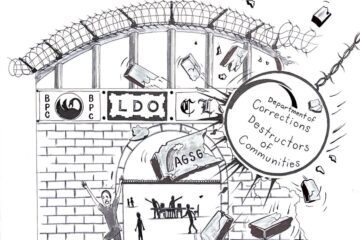
Like the graphic, looks like my closet…
now to read.
could we have ever imagined so much damage in 8 years.
and the man walks around like he is king of the world, and the beginning of this depravity, ronald reagan is lauded by these sociopaths as their role model
How are we going to get past the one track thinking so the problems can be resolved?
”The old paper for oil economy”
What’s the replacement?
Digg this one up!
Great post, thank you Stirling.
“Infinitely long lived rational profit maximizing trolls” seems like another argument against corporate personhood.
What perris said.
Let the market work. The banks will go do and we can and should have a banking system which is more of a utility than a profit center for the rich and slimey.
Stirling,
Capitalism without lots of regulation and a redistributive tax system will produce exactly what we have. No other possible outcome.
Capital needs to exploit labor AND materials and the people = labor.
Profit doesn’t grow on trees, it comes from the backs and sweat of workers.
Money doesn’t grown on trees, it’s printed and given to banks to sell to you and me.
What we need is to redistribute the productivity gains of the last 30 years from the Ruling Predatory Class to The People.
Confiscatory taxation would be a pleasing start, but much more needs to be squeezed out of them.
Too bad none of the brainiacs in power right now want to do anything except restart the failed predatory model that’s been larding up the top 1% at the expense of everyone else.
The only thing that’s funny about it is that the predators are so busy stealing from one another right now they can’t pay attention to the grumbling of the masses.
Do we sense an opportunity??
How do we get the new money out of the system before we seemassive inflation in consumer prices?
I’d say dollar devaluation will happen but the entire world seems to be pumping money supply. Europe certainly has some problems – they’ve got a lot loaned to Eastern Europe, and many of those loans are looking worse than US Subprime and Alt-A loans. They also played the levering and packaging debt games.
“Every crisis is an opportunity” – R. Emmanuel, alleged DLC mastermind
Wow, you wrote the initial wikipedia entry just over 4 years ago.
It is staggering, isn’t it. But his minions are having difficulties finding employment consistent with their, er, skill set.
But we have to look forward not backward when it comes to the economy. My questions are seriously difficult.
Barro is a smart guy who got more mileage out of his Ph.D thesis than anyone besides Einstein has a right to. He’s not a particularly good economist. I don’t know if it’s because he was trained at Chicago, or was just born that way.
A phenom of a post Sterling and yet there may still be away to level the playing field. No doubt China is turning off the tap and they understand the value of patience. Yes the trolls are trying to ignite the old system. it won’t work because another bubble would have to be created. But there are those in the world who are pumping a new bubble, this time in commodities and at the top of their list is gold.
Imagine owning something that is increasing in value ( over $1,000 per ounce now )and is contra to everything the dollar stands for. The dollar is a relic of a debt based system that must continually feed on itself. Gold and silver are no ones liability and allows the middle class to level the playing field. This is what Greenspan stated back I think in the 60’s when he said that the statists hated gold because it was money that they the elite could not control.
The world now has come to a cross road. All Obama is doing is really trying to bring back to life a system that should have been killed off a long time ago. It won’t work and the price of gold is warning the administration to find another way that all on the planet can find a way to survive. either we do or we all go down with the ship.
This thesis makes sense to me only in the way Keynes makes sense when he talks about “animal spirits” and “conventional psychology” really driving the markets and the economy. Which is true but it’s not science. It’s game theory. Are we going to run the country on game theory now? Are we having fun yet?
This article is an analysis of what usually is dismissed as outside economic scrutiny as “structural issues”. It is in fact a valid use of normative economic thinking as in “What needs to happen and what is there to move in this direction?”
The structure of the relations in the international trading system are no more sustainable than the fossil fuel economy on which that system depends. For discussion of paper-for-oil transactions, a good read (for the fact that it’s thirty years old, is Martin Mayer’s The Bankers.
The exchange of guns for butter should be obvious. Why else would the world still deal economically with the US when it is only pushing paper (and here we are talking private debt as much or even more than public debt in the US) on them?
It is neither science nor game theory. It is structural and network analysis.
.
Recession? Nah. There’s really just a crisis of imagination. There are so many opportunities out there! For example: Many families are finding it hard to feed themselves, much less their pets. So I had the bright idea of starting a business that collects these poor little critters and promises to find good homes for them. Of course that’s impossible, but we really make a show of it and leave the families feeling that their pooch or pussy has gone to a better place. And they have, actually.
The other bright idea I had was to offer low-cost in-home shopping solutions under another company name (with the same staff only with false mustaches) to strapped families that allowed them to order cheap fresh chopped meat and have it delivered, thus saving them big bucks on gasoline. It’s win-win-win: We make money, the customer has several problems solved at once, and the pets really are in a better place: Their owners’ stomachs.
All it takes is a little imagination, peoples. It’s not a recession. It’s a Refreshin’®!
.
Ahem. As someone who had a very ‘nourishing’ relationship with our family dog that did not involve ingestion, I think you might want to put a snark tag on that one. Jus’ sayin’.
How to create a gold standard:
1. Confiscate all gold.
2. Declare gold standard.
People who believe that buying gold and agitating for a gold standard will get them easy wealth are simply not looking at the historical experience. Governments create a hard money standard when they have the money, and other people have it hard.