

[Please welcome Mahvish Rukhsana Khan, and Jamil Dakwar, Director, Human Rights Program, American Civil Liberties Union]
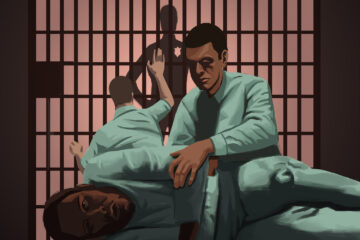
Since January 2002, the US government has held more than 750 detainees in Guantánamo without fair trial or meaningful access to independent courts. Many detainees have been subjected to various forms of torture and abuse, including prolonged incommunicado detention, disappearances, beatings, death threats, painful stress positions, sexual humiliation, forced nudity, exposure to extreme heat and cold, denial of food and water, sensory deprivation such as hooding and blindfolding, sleep deprivation, water-boarding, the use of dogs to inspire fear, and racial and religious insults.
Today, 253 detainees classified as “alien unlawful enemy combatants” remain in US custody and only 23 have been charged before a flawed system of military commissions. The detainees are held in several detention camps under maximum security arrangements and almost complete isolation from the outside world. Since the landmark U.S. Supreme Court decision in Rasul v. Rumsfeld which for the first time allowed attorneys limited access to the prisoners, a sea of information has been surfaced about the conditions and treatment of detainees at Guantanamo.
News reports, congressional investigations, lawyers' accounts, testimonies of former prisoners and official documents obtained under the Freedom of Information Act litigation confirm that the abuse under the Bush administration's lawless detention policies was widespread and systemic.
Despite enormous restrictions and difficulties, a growing number of American lawyers – many of whom are doing it pro bono - and their interpreters are having access to the prisoners and are telling the stories that many American find it hard to believe that the U.S. government did in fact sanction abusive treatment and indefinite detention without trials of hundreds of men it deemed a threat to its national security. While some of the prisoners are considered dangerous and may have committed serious crimes against the United States, many of the detainees ended up in Guantanamo because they were in the wrong time and the wrong place and because someone had paid a high bounty for their capture. For more than six years they have yet to be given a chance to prove their innocence.
My Guantanamo Diary eloquently tells the human story that is often missing in political debates about Guantanamo. It includes compelling accounts of who the people are who have been detained for years without charge and were described as the “worst of the worst” by former Secretary of Defense Rumsfeld.
Despite the depressing situation, there is hope. First, the two major party presidential candidates have committed to closing Guantanamo. Second, last June the Supreme Court partially reinstituted rule of law in Guantanamo when it held that the U.S. Constitution applies to the detainees and restored their right to challenge their detention by bringing habeas corpus petition to a federal court. Third, just last week a federal court ordered the release of 17 detainees who were unlawfully held by the government even after they were cleared from any national security threat or charge since 2004. Finally, not only the international community is outraged by Guantanamo but, according to national polls, Americans are equally concerned and alarmed and strongly support closing it down.
Big questions however remain regarding the extent to which the newly elected president will deliver and act on their promises and finally bring an end to this shameful chapter in US history. In the meantime, personal accounts like My Guantanamo Diary will continue to offer a unique insight and shed more light on this dark spot in the hope that the public will be better informed about what is being done in their name.
Login Here
Spotlight


Support this site!
Keep
up with news
Advertise on Firedoglake
Send
us your tips
Make us your homepage
About Firedoglake
Advanced search


RSS/XML Feed
Mahvish, Welcome to the Lake.
Jamil, Thank you for Hosting today’s Book Salon.
Hi Beverly,
Thank you for having me on the Lake and thanks Jamil for hosting..
While we wait for Jamil to jump in, please tell us something about your background.
Mahvish has written a remarkable book which tells the human story of some of Guantanamo prisoners. What makes this book far more interesting than many other books written about the infamous US detention center is that she brings to the reader the human dimension based on her inter-face dialogues with many prisoners first as a interpreter (Pashtu) and later as legal adviser. Let me first start by asking Mahvish how did you get involved in the Guantanamo work and what was the motivation for writing this book?
Mahvish and Jamil, welcome to FDL!
I have not had the opportunity to read the book (that reading list just gets longer and longer) but do have a question: What about the detainees and their stories did they most want to have us become aware of in the US and the rest of the world? Besides their freedom, what do they wish to have happen?
Welcome to you both and thank you for coming. What do we know about how/whether conditions have changed since the military trials began? Have conditions improved as a result of the added though still scant publicity?
Thanks for the nice intro!
My initial interest in Gitmo was sparked while I was in law school studying the federal torture statutes and how Wash. policy makers had cleverly circumvented legal principles in creating the military detention camp in Cuba– where prisoners could be held indefinitely without ever being charged.
I remember feeling a growing sense of indignation by how criminal and medieval all of it seemed. The detention center at Gitmo was built in Cuba to weasel around the cornerstone constitutional principles that America was founded upon; that this Gitmo charade was really nothing more than a lawless black hole where prisoners were hidden away from the world—without a voice, without being charged, without an impartial hearing. At the time, I didn’t know if the men at Gitmo were good or bad—simply that they shouldn’t be stripped of basic civil and human rights. Only a fair trial could separate the good from bad.
I wanted to get involved, so I Googled the landmark Supreme Court cases I was studying. My internet search revealed who the attorneys on those cases were and I quickly got in touch with them. I wanted to be involved as a journalist and a lawyer. When I learned that there was no one with security clearance who spoke Pashto (a predominant Afghan language) I applied for security clearance and got my foot in the door as an interpreter for habeas lawyers representing detainees. My role eventually grew, but that’s how it all started.
The motivation to write the book was based on my meetings with prisoners. I felt compelled to share what i had witnessed at Gitmo.
Welcome, Mahvish and Jamil. I will never forget the shock I felt when I saw the pictures from Abu Garaib. I hope there will be war crimes trials soon.
Yes, conditions immproved at Guanatanmo but serious probelms remain such as lack of fair judicial hearings and trials, harsh conditions of isolaiton and more …
The detainees did often wonder what Americans thought about them… one detainee in particular comes to mind. He was the second prisoner I met, Haji Nusrat Khan.. an 80 year old parapalegic who as a result of 2 strokes was bedridden 15 years prior. He was brought to gitmo on a strechter.
Haji nusrat continually asked why his story was not being told, why journalists were not allowed to meet him at Guantanamo.. and whether america knew his story and that of so many like him.
A bit outside the box here, but have you heard any things about the morale and attitudes among the soldiers running Guantanamo, from right below the top to the lowest privates? Any evidence of disilluision among some? Or evidence of enthusiasm for the job helping career advancement.
If not that any testimony by the prisoners about differences in the troops they interact with.
I seems you got access as a needed interpreter. It there yet any means by which other reporters, not connected with the attorneys, can get access to the prisoners. And what of those who are held but not indicted for war crimes? Do they remain basically hidden, unreachable?
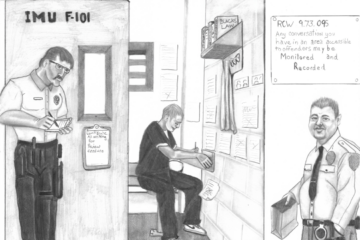
To expand on what Jamil mentioned about isolation. Most (not all) of the prisoners are kept in a 7 X 8 foot cell– about the size of a king size mattress. In that space is a toilet, sink and bed. Many eat every meal alone, pray alone and many never see daylight for months on end (when recreation time is given in the middle of the night).
Mahvish, the book is fascinating because it is also about you, your personal background and life as a young woman born and raised in America to immigrant Afghan Muslim family. In the book you say: “Somewhere along the way, I’d reached a level of equilibrium in my cultural balancing act. I no longer struggled with the classic East versus West identity crisis; I wanted to be accepted as a viable product of both worlds. I handpicked the characteristics that suited me from both cultures and left the ones I didn’t care for.” Can you share with us some difficult moments where you had to struggle with the 2 identities? How is it like to be raised in America in an immigrant Afghan family?
Mahvish, when you interpreted and later represented the Afghani men, how did you dress?
I have said from the beginning, there is only one reason a regime might want to endorse policies of torture, that reason is NOT to get more information (with torture you get less information, less valuable, less actionable)
the only reason is fear, you want to instill fear among the populace, you want to facilitate the shock of the occupation.
if you want unrest, if you want insurgents, if you want your occupation to last indefinitely, THOSE are the reasons to have policies of torture.
I do believe the only method we have at our disposal of regaining our position as fair brokers in the international arena would be to charge these criminals with they crimes they committed
that would be the first step and then we MIGHT speed the reconciliation that is necessary for stability to be returned
My experience with guards and low level military police is that they have no idea who they are guarding. Prior to coming to Gitmo, the prisoners (at Bagram airbase in Afghanistan) have their facial hair shaved (eyebrows, hair, beards), they are all dressed alike, and they are stripped of their names and individualities. The prisoners are then serial numbered. The guards never knew the names of the detainees we were meeting. They only knew them by their serial number. thus, it is easier to mistreat something called prisoner 1154. Its easier to believe that he is a terrorist, to torture and spit on him. Its harder to dole out such abuses when you know 1154 is Dr. Ali Shah, a pediatrician and an employee of the United Nations. At best the guards were uninformed. Some did express frustration with the institution
When I say conditions have improved it is largely because most abusive interrogations methods and other harsh disciplinary tactics have been rescinded, largely as a result of public pressure and legal challenges .. we still don’t have access to the detention facilities and some of the detention conditions resemble those in super max prisons in the US.
I dressed very conservatively. I covered my hair and wore pants or a long skirt. On my first trip to the base I was nervous– about meeting some member of the taliban or al-qaeda (it was all i had heard in the press). I was all apprehensive about the way I would be treated as a woman. When I opened the door at that first meeting, I met a man looked just as nervous as I was. He was shackled to the floor and standing in a corner. But when our eyes yet, he broke in to a smile. and i smiled back… walked over and shook hands with my first “terrorist.” I later learned he was Dr. Ali Shah, a pediatrician and UN employee.
Can you tell us more about Dr. Ali Shah, how did he end up in Gitmo?
Pretty much sums up the whole sorry GITMO mess. Thanks for your insight and work in recording something that needed to be preserved for future generations.
While the U.S. military purports to allow journalists on the base, in truth– its a total joke. Journalists are given a mickey mouse fun tour of the base, they are shown a model cell, and sent home with only the military’s perspective. No journalist has ever set down with a detainee at Guantanamo. They have been systemicatically hidden from the press, and public. Not knowing them as individuals, as people, makes their indefinite detention and abuse more palatable.
Thank you. Check out the website www.mahvishkhan.com for photographs of the detainees. I met many of them after they were released from Afghanistan (a profound experience) and some of the photos are on the site.
Reporters are denied access to the prisoners and the only body that had access to all prisoners has been the International Committee of the Red Cross. We know, however, that the Red Cross was denied access to some prisoners (see for exmaple the SOP for camp Delta: http://www.wired.com/politics/.....7/11/gitmo) and that the under the common Red Cross protocol the organization can share its own own findings with the government only. Reporters can only get what is commonly known as Gitmo VIP tours …
Aloha, Mahvish and Jamil! Welcome to the Lake!
What do you think will happen to the Uighurs?
Sure. Dr. Ali Shah (known by the pentagon as 1154)was the first detainee I met at Guantanamo Bay and the more i learned about him through our independent research and from those meetings, the less it made sense of why he was there. Dr. Ali Shah was a pediatrician. He was also a shiite muslim (which are a persecuted minority by the Taliban in A’stan). His wife was an economist by profession. He fled to neighboring Iran because he refused to have the women in his family raised under that oppressive regime.
Dr. Ali Shah returned to A’stan only after the Taliban were overthrown to help the UN increase Afghan electoral support and to set up his health clinics. Dr. Ali shah also wanted to run for parliament in the new democracy. He was arrested 2 days after returning to Afghanistan.
It is speculated he was turned in by political opponents. He was released without ever having been charged. I visited him in Afhganistan. He now suffers from post traumatic stress disorder and depression. But he has opened his health clinics and is happy to be home.
With all the pressure to close Gitmo’s prisons, what do you expect to happen next year? And what do the detainees know about this debate?
Mahvish, thank you for all you’ve done. It must have meant so much to the people imprisoned there to have a simple human interaction with you, a conversation, a handshake, a smile. Many blessings.
I just can’t stand what we have done.
Did you come across Binyam Mahammed, whose case is causing quite a lot of unpleasantness between Britain and the US?
Last Junes Supreme Court decision has added alot of pressure to the DOD. I believe they will transfer the great majority of the prisoners to their home countries prior to any civilian trial being held. It would bring great shame to the U.S. administration if detainees like 80 year old Haji Nusrat and pediatrician Ali Shah were given public trials.
The only ones that will receive this sort of publicity are the high value detainees (all of whom were brought to guantanamo 5 years after its inception).
Sorry for my spelling “Mohamed” I think.
I never met Benyam, however his attorney allowed me to publish in My Guantanamo Diary” some of his personal diary accounts of being held in a Moroccan secret prison.
I think they should be released with a personal apology from the President! Some of them should be resettled and given protection in the US. European countries can also help. For example, Germany has a large Uighur community and they can start a new life and recover from Guantanamo trauma over there …
Welcome, Mahvish and Jamil.
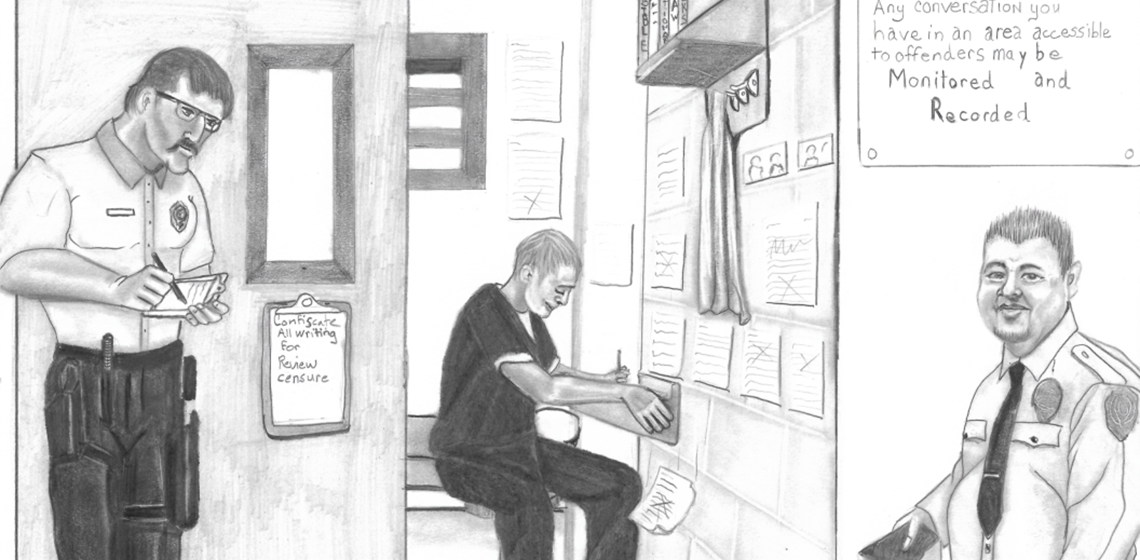
Mahvish, could the prisoners speak freely with you or were the conversations monitored or censored in any way? Also, are there any under age people in custody at Gitmo?
Mahvish and Jamil, a great honor to have you here at FDL.
Bookmarked, thanks.
Some of those detainees reminded me of any member of my family. They have been so incredibly dehumanized, that i found small gestures– just treating them like human beings instead of the serial numbers they have been reduced to– were immensely therapeutic.
For example, we often brought them their favorite Afghan dishes, lamb chops, chocoloate, starbucks chai (bec it was the closest thing to the sort of tea they drink back home).. and there was alot of small talk.
My book talk about the relationships that were forged at Guantanamo. There was some interfaith dialogue between attorneys and clients. Some detainees were puzzled by american culture and vice versa.
One detainee wanted his lawyer to explain internet dating to him and why americans drink to the point of impaired judgment. His lawyer in turn quizzed him about how he juggled two wives…
Over two years, I forged some close family type dynamics between some of the detainees, who i continue to visit and keep in touch with post-release.
Thank you!!
Mahvish, in the book you say that “as part of building a relationship and trust with your clients is engaging them not just on a legal level but on a personal one as well.” Hoe does this come into play at Guantanamo?
In the more publicized trials, according to US reports, some defense attorneys have had their clients refuse to cooperate on the belief the attorneys were co-opted by the military. Did you encounter this and if so, were you able to overcome the trust problem?
They get much less than a personal apology. Most of the hundreds who have been released are still declared “enemy combatants.” When i visited prisoner 1009 (Haji Nusrat Khan, 80 year old parapalegic) in sarobi Afghanistan following his release from Guantanamo. He had one question… can you take me to america for medical treatment.
I was baffled that he wanted to go to the united states. Regardless his request and obtaining a visa would be next to impossible since he is still classified as an Enemy Combatant against the U.S.
Sounds like getting a name off the “enemy combatant” list is even more difficult than getting a name off the “no fly list.”
Most of the prisoners initially do not trust their attorneys. These men have been held in solitary confinement and some abused physically and constantly humiliated (in the form of strip searches and 15 full cavity searches in full view of others). The only individuals they have known year after year are their american captors. So when an attorney walks in– its hard to distingish friend from foe. Trust often took a lot time to build.
By the way, I initially assumed that the detainees must have done sometime to have been brought to Guantanamo Bay. I expected to meet a few terrorists. When I learned of the bounty system, i quickly understood how so many mistakes were formed.
The US mil air dropped thousands of leaflets all across Afghanistan offering up to 25,000$$ per member of al-qaeda and/or the Taliban. The average afghan makes 80 cents per day (300$ per year). Offering that kind of money to an Afghan is like hitting the Super lotto jack pot.
Couple this intense poverty with the complex political, tribal, relgious and ethnic feuds that date back for generations.. the bounty program created a black market for warlords, and others turning one another in to the U.S. military
The fundamental flaw here was that the military did not investigate what locals (who were gaining financially) were alleging about one another.
Thanks, but, no chance they can even go back to A’stan or China, eh?
We treated them like human beings. There was one detainee Taj Mohammad (a 27 year old goat herder). He wanted to spend the meeting time learning to curse in english : ) For others, we brought photographs and videos of their children who they had not seen in 5-7 years. I brought flowers for detainees (many had not touched or smelled flowers in years)… and one man pulled at his beard (he was careful to avoid the grays) and asked me to send them to his wife.
We did our best to give them control, to treat them like friends.. and in the process grew to care about them on a personal level.
Before our time is up… heres an excerpt. It is of the first meeting with 80 year old haji nusrat. it resonates with me bec it speaks to his goodness of spirit.
As the meeting ended, it was obvious that the old man was in pain. His legs hurt, and he tried to stand and stretch them. He pushed hard against the tabletop with his palms, trying to lift his weight. I leapt to his side and helped him stand. He gripped the edge of the table for balance and exhaled deeply.
A few moments later, I helped him sit back down. As we started collecting our things to go, I turned back to Nusrat, who was watching us gather up the pizza boxes and pistachio shells and unfinished baklava. The military didn’t allow any food to be left with the detainee, so we had to take any leftovers with us.
“Bachai, tell your mother and your father that an old man with a white beard sends his salaams,” he said.
I responded with the customary reply: “Walaikum as-salaam—And may peace also be upon you.”
I adjusted my shawl one last time and glanced at him. He was quiet for a moment. Then, he opened his heavy arms to me, and I embraced him. He pushed my head into his white prison uniform and for several moments prayed for me as Peter watched: “Inshallah—God willing—you will find a home that makes you happy. Inshallah, you will be a mother one day. Inshallah, you will always have a family that will protect you. Inshallah, you will finish law school and continue to help us. Inshallah, you will make the world proud.”
Then, he patted my back. “You are a great woman, and may Allah make you greater,” he said.
Finally, he let me go and asked me to say du’a, prayers, for him.
“Of course,” I promised. “Every day.”
And until the next time I saw him, I did.
It went on and on like this. Prisoner after prisoner. They were not the worst of the worst. Some of them in fact were the best of the best. Charitble, upstanding citizens who if Americans would be outraged to know was wrongly imprisoned. I felt completely deceived after that first trip.
Due to the unwillingness of our politicians to act, Omar Khadr (Canadian) has been there for five years. He was sent there at 15 years of age.
In some of the commissions which have taken place, the strength of argument and disapproval of the whole process on the part of some of the military personnel defending detainees has been surprising/heartening. Have you met any of those individuals and do you get a feeling as to whether their views are widespread in the military legal community?
To answer your question about under age priosners at Guantanamo: we still don’t know the exact number of minors (chidlren under age of 18) who were held at Guantanamo but according to Department of Defense documents listing the names and birthdates of hundreds of Guantánamo detainees,
released in May 2006 pursuant to a Freedom of Information Act request filed by the Associated Press, at least 23 detainees were under the age of 18 at the time of their transfer to Guantánamo between 2002 and 2004. In the case of 20 detainees, the date of birth was “unknown.” Other
sources quoted in the media indicate that the number of juveniles detained at Guantánamo may be as high as 60.
At least two prisoners who were under 18 when they were transfered to Gitmo remain in US custody. On November 8, the eyes of the world will be focused on Guantánamo for the start of one of two first-ever trials accusing former child soldiers with war crimes. Omar Khadr, a Canadian citizen held in Department of Defense custody since the age of 15, has been detained at Guantánamo on charges that include crimes he allegedly committed at the age of 10. The second trial, to be held next January, will be that of Mohammed Jawad, an Afghan national captured at the age of 16, a young man whose case has been marred by ethical and legal problems, problems that have even led the government’s prosecutor to resign in protest last month. ( http://www.washingtonpost.com/.....01_pf.html )
I don’t have considerable exposure to individuals involved in the commissions. I have had some interaction with individuals in the military legal community who disapprove with the procedure and limitations of the military commissions the same way as many habeas attorneys do.
A wonderful memory to cherish…stay strong and stay safe…
In addition to this, there were all sorts of obstacles created by the military. There are consistent delays (once 5 hours in the sun) waiting to see a detainee.
There is an ever growing list of contraband and searches which prolongs the process. Hair clips i found out recently have been declared contraband (in the event that a detainee is able to pick his cell lock open, is the explanation I was given).
Dental exrays that i had in my purse following a visit to the dentist were also confiscated (as if my dentist had encoded messages for the enemy.)
Detainees have been instructed that their lawyers are not to be trusted because in two instances — they are “jews” and “gay”…
the list is endless…
Thanks for your support.
It is hard to know. So far four military prosecutors including the chief military prosecutor, Morris Davis, resigned citing legal and ethical (and some of them even religious) reasons. There is a very interesting story in the LATimes today about this very issue: http://www.latimes.com/news/na.....2481.story
The courage and dissent of many lawyers in uniform (JAGs) has been one of the most powerful opposition to the Bush administration lawless Guantanamo policies.
Readers will also be interested to learn about Salah al-aslami, a Yemeni detainee who the DOD says committed suicide in a joint pact of “assymetric warefare”. I got in touch with his family—who hired an independent team of swiss pathologists to conduct a second autopsy.
The swiss team flew from Geneva to Yemen and conducted a second autopsy of the dead former detainee. The swiss team could not conclude that suicide by hanging was the cause of death because prior to shipping the body back to yemen, the vital organs in the throat had all been removed by the us military. MY Guantanamo Diary devotes an entire chapter to the suicides at Guantanamo. This was unfortunantely not investigated or reported at all in the US press.
Mahvish, what was the reaction of the Department of Defense to your book? You wrote an article in the Washington Post ( http://www.washingtonpost.com/.....45_pf.html ) which DoD did not like, tell us about the response to that article. What happened?
Delurking here to say how much I admire the work and effort you’ve put in Mahvish, not only to help the detainees but shine a light on what the administration has been doing. I hope it gets the exposure it should. I also just quickly checked out your website. thanks so much for those amazing photos of the detainees and Afghanistan (I had no idea Kabul could still be so beautiful after decades of war).
Thank you for your good work, Ms. Khan.
Following my first few trips to the base, I wrote an article about my experiences at Guantanamo. I was quickly banned from the base. The base commander Harry Harris wrote me a letter stating that I had caused a security threat to the base and the individuals who work on the base with my washington post article. They were annoyed that i published a photograph of one of the mps– in addition to a photo of beach and cliffs (As if terrorists done know about google earth).
My base privileges were restored after I apologized AND i think it helped that the Washington Post offered their attorneys to me.
My belief is that I was banned because I acted as a journalist. Journalists are not allowed to meet detainees…
Thanks for your support Loo hoo! check out the website photos of detainees: www.mahvishkhan.com
Digg it
Mahvish, Jamil, what are your thoughts on the news article this week about the Federal Courts blocking the release of the 17 Chinese detainees?
Thanks for that link. We know Morris’s claim that all information is handed over us rubbish. It is exactly that which is at the heart of the litigation in London on the Binyam Mohamed case. The judgement in that case, made almost unreadable thought it is by the witholding of lots of information the judges saw, leaves little doubt that there is a real pressure from all over the place in the US Government to withhold evidence from the defence.
Thanks for the nice note. My Guantanamo Diary elaborates on those trips to Afghanistan to collect exonerating evidence on behalf of gitmo detainees. Its a country of profound beauty.
It was my first trip to Afghanistan and i was very much touched by the experience of travelling there, meeting released detainees, and getting to know the country and its people.
I think Afghanistan is the ultimate Shakespearean tragedy, of sorts. The Afghans are incredibly passionate, extremely hospitable, charming and a beautiful people. Yet they are perpetually devasted by tragedy–whether it is the constant warfare, the oppression of women, the poverty, and so many many men who have been rounded up and thrust in to the legal black holes of Guantanamo Bay, Bagram Air Base (outside Kabul) and other prisons.
It should be noted that Gitmo is just a scratch at the surface of a much larger system of cia black sites.
Since Januarys 2002, there have been dozens of suicide attempts and four apparent suicides and yet the Bush administration refuses to come clean about what happened, when, and most importantly, why? The secrecy surrounding deaths at Guantánamo hides the dire consequences of indefinite detention from the American public.
According to news reports, hunger strikes and suicide attempts at Guantánamo began soon after the facility opened in 2002. In 2006, after three prisoners apparently killed themselves by hanging, government officials claimed their deaths were a “PR move.” After lawsuits filed under the Freedom of Information Act the government released the suicide notes and announced the closure of the military investigations without any significant findings or recommendations! ( http://www.huffingtonpost.com/.....21358.html ) Overall, the Defense Department has reported that five detainees have died since 2002 and 41 have attempted suicide between 2002 and 2006. However, these figures most likely underestimate the actual number of attempted suicides at Guantánamo during this period.
Mahvish — thanks so much for all you’ve done — what are you working on next? Will you continue your visits and diaries?
As Federal Judge Ricardo Urbina said… delay has been the name of the game until now. I believe that the institution of guantanamo was created as a legal loophole so these men would be denied basic rights.
The uighers have been at the center of this legal debate for along time because they (like so many others) were swept up by mistake. The U.S. military concedes that they are non-enemy combatants but still holds them in captivity (for now 7 years).
I believe they playing the delay game, because having the uighers show up in US federal court would add further shame to the U.S. administration. If Americans could see who these men were, we would think… this is who we have holding in guantanamo for 7 years? By hiding them away in Cuba, Americans know the detainees collectively as a nameless and faceless entity, a mass of foreigners only known as “guantanamo detainees.” if we knew them as individuals, understood how hundreds were sold in the U.S. bounty system, there would be a greater sense of public outrage.
While critics might say this is a war on terror– I remind them that the U.S. legal system is fully capable of trying terror suspects on U.S. soil. It is something we have done in World Trade center bombing 1 and in other instances. There are statutes dealing specifically with classified information.
The whole idea behind the creation of the flawed system of military commissions is to spare the government the embarrassment of disclosing such information and secure convictions which would not be possible in federal courts because not only some of the evidence will be found tainted (like information obtained under waterboarding) and inadmissible but the mistreatment of the prisoners would amount to “outrageous government conduct” which would justify dismissal of charges!
Could not agree more. A recent report published by Human Rights First studied more than 120 international terrorism cases prosecuted in U.S. courts and found that the federal criminal justice system adequately balanced the U.S. government’s need to protect sensitive national security information with defendants’ right to a fair trial. The report found that specially tailored federal anti-terrorism laws and other generally applicable federal criminal statutes provided an adequate basis for detaining and monitoring suspects and offer a broader spectrum of prosecutable offences than the military commissions, which have jurisdiction only over war crimes.
Thank you for your support scarecrow! and happy halloween : )
I now represent one Afghan detainee under supervision. I will see him in 2 weeks. I am studying for the california bar right now.. and using some of the book revenue to build wells in Afghanistan. This is project in the works..
Since money and direct gifts to families of detainees can be construed as funneling money to terrorists (the released go home with the Enemy combatant classification– i believe as a way of protecting against admission of guilt for future lawsuits)– the safer way to give back to their communities is something simple like a well.
Who can forget this beautiful Afghani girl?
Also, just to be clear, I do believe that Gitmo does hold some individuals who deserve to be called the worst of the worst (as donald rumsfeld famously stated). That said, i know that Guantanamo also has imprisoned some of “the best of the best.” Some detainees were some of the most amazing people i have met. They have taught me so much.
Dr Ali Shah –despite is post traumatic stress disorder– is now serving his people again, a pediatrican who wanted nothing more than an Afghan democracy.
He was also one of the most hospitable and kind individuals that i met.
His personality (and that of so many other that i visited post release, as discuss in my book) were consistent from Gitmo to Afghanistan.
Mahvish, you visited some of the detainees since their release? What was that like?
Talk about insult to injury. That is truly disgusting. It boggles my mind that more people aren’t incensed by this.
Bless you. And good luck on the California Bar. I apologize that because of my generation — Nixon, Mitchell — ours was the first California law class (1975) that had to pass an ethics section as part of the state bar exam. I think it’s still there. I don’t think you’ll have any problems.
oops, in meant “adding insult to injury”
I have visited several. (
Since I mentioned Dr. Ali Shah and Haji Nusrat, ill start with them.
Both were released following years of captivity at Guantanamo. Both (including 80 year old parapalegic haji nusrat) were tortured. Neither were ever charged with anything criminal. Both were released as abruptly as they had been arrested.
Because I grew to view them as family.. and they inturn referred to me as sister or daughter, I was eager to see them after their release.
It was a surreal experience for me to see Dr. Ali Shah. I was overwhelmed by his happiness, by the fact that he was finally safe from harm, at home with his sweet mother, siblings and children. He is loved in his community. He was exactly who he said he was.
I desperately wanted to give him a hug when i saw him in Afghanistan. But Afghan culture throws up so many barriers between men and women, so i settled for a tight hand shake. I spent the day with his family… and they asked me to stay the night and attend a relatives wedding. I couldnt because I had to get back to kabul (several hours north).
When Ali Shah walked me to my car.. he said.. “A wedding is a happy occaison. You coming here today has brought us us the happiness of two weddings.”
I felt that that made up for the bear hug i wanted to give him. I consider him like a brother today.
It was also amazing to see Haji Nusrat, 80, (without giving away the book!) he had the same personality as he did at gitmo… grumpy old man.. but really sweet. I was honored to visit him at his home..
I do believe that most Americans would be incensed if they knew.. but this stuff never makes it into our media. (such as the organ removal of dead detainees)
Grumpy old men should be allowed to be grumpy old men in their homes and not in prison cells on an island in the Caribbean.
Do you if they are getting any kind of therapy and professional rehab treatment which I imagine is extremely hard to obtain in Afghanistan?
As we come to the end of this great Book Salon,
Mahvish, Thank you very much for stopping by the Lake and spending the afternoon with us discussing your book and experiences.
Jamil, Thank you very much for all that you do and for Hosting today’s Book Salon.
Everyone, if you haven’t bought this great book, there is a link above.
Thanks all.
As stated above, he wanted to come to the United states for medical treatment… but as an enemy combatant that is unlikely. He never blamed the U.S. military for his arrest, and faulted “some honorless Afghan who probably sold me for a bounty”… but he did fault the military for holding him as long as they did and not conducting an investigation.
he was never charged with anything. his son is now a senator in karzai’s parliament.
I know that Dr. Ali Shah is seeking treatment for depression… i dont believe the vast majority have such access in a poor country like A’stan.
Thank you all and don’t forget to check out Mahvish website: www.mahvishkhan.com
Thank you all for participating. Your support for this means alot to me.
Thanks Jamil and Bev. you guys are awesome : )
Thank you Mahvish and Jamil for this enlightening afternoon and bless you for your actions.