

fdl_colombia.jpgAFL-CIO blog writer James Parks talked with Colombian trade unionists who traveled here last week to urge Congress not to pass the U.S.-Colombian Free Trade Agreement. As James relates below, Colombian trade unionists do not want Congress to reward that nation with a trade deal in a climate of fear and death that they and their union compatriots face daily. Online with us today are two AFL-CIO specialists in trade, Brett Gibson and Jeff Vogt, who can answer questions and fill in the details.

On April 23, 2008, Jorge Gamboa was in Yarima accompanying a group of African Palm workers who were on strike to demand respect for their basic labor rights and to seek negotiations with their employer. Two individuals targeted Mr. Gamboa, one of them holding a revolver. Gamboa was fortunately able to disarm the individual before any shots were fired. The striking workers then apprehended the two assailants and turned them over to the police.

Instead of arresting the two men, the police put them in a truck and drove them to the highway where they were released. At no point did the police question or arrest the perpetrators. In fact, they assisted them in their escape.

That’s what the life of a union leader is like in today’s Colombia. You could be killed at any moment and chances are not much will be done about it. Murders of union leaders often go unpunished because the murderers most likely are members of paramilitary groups with close ties to the government, Gamboa says.

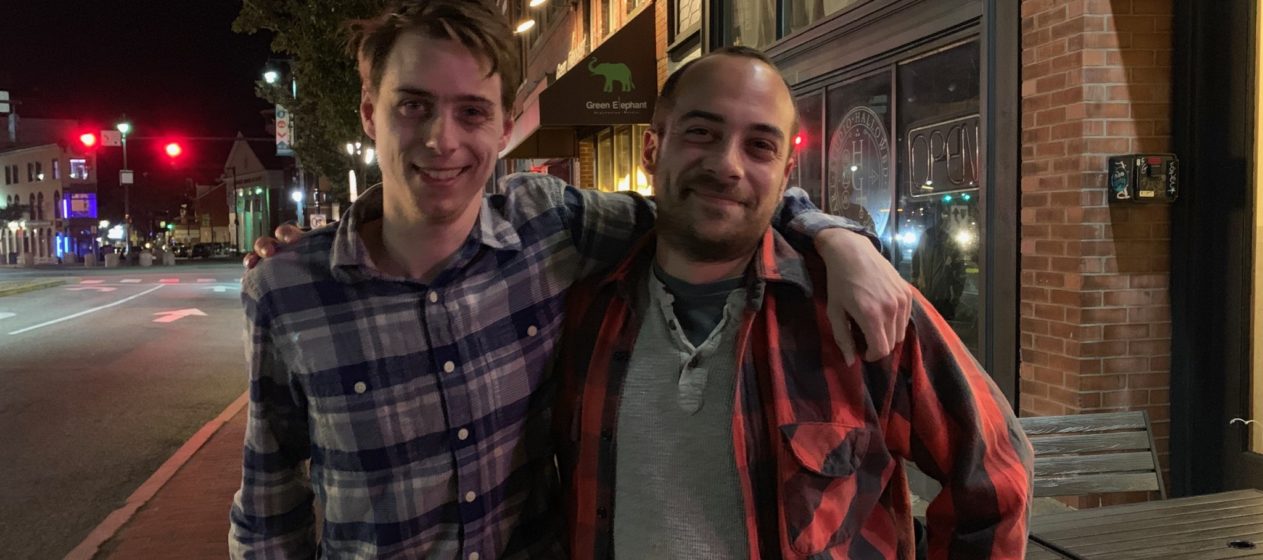
Gamboa, the president of the National Petroleum Workers Union, is one of seven Colombian union leaders who visited the United States last week to lobby against the U.S.-Colombia Free Trade Agreement (FTA). He says 85 members of his union have been murdered and 400 have gone underground. The murders have killed a father or mother of some 650 children in his union alone. He says last week, workers uncovered a plot to kill his union’s general secretary and a union vice president was threatened. A Colombian labor scholar says trade unionists in Colombia face genocide.

Gamboa traveled to Washington, D.C., to make sure Congress “realizes what’s really going on” in Colombia. In meetings on Capitol Hill, he and his colleagues told lawmakers that despite claims by the Bush administration and Colombia’s President Alvaro Uribe that progress has been made in stemming the violence against union members, the reality is that violence has increased against labor leaders in Colombia.

More than 2,500 trade union members have been killed in Colombia since 1986, including 39 murdered in 2007 and another 24 killed so far in 2008—a rate of more than one a week. Yet the Colombian government has obtained convictions in few cases and has done little to stop the bloodshed or guarantee worker and human rights in the country.

Another 6,500 union members have been threatened, attacked, kidnapped, tortured or harassed in the same period. Of the seven visiting unionists, at least four have received threats recently. But their resolve is strong. Speaking at a reception Wednesday in their honor at the AFL-CIO headquarters, Luís Alfonso Velásquez Rico, from the Unitary Workers Center (CUT) , said:

Don’t think of us as victims. The political map in South America is changing, he says, and the workers are on the right side of history—and together with trade unionists from the United States, they will prevail.

As horrendous as the violence is, the Uribe government is making the situation worse by promoting an anti-union culture throughout the country, says Ivan Toro Lopez, a member of the executive committee of the National Association of Bank Workers (ASEB).

Business and government have joined with Uribe to deny the right to strike, to organize, to bargain collectively. Multinational companies are taking advantage of that culture.

Lopez says Colombia’s trade unions are strongly opposed to the FTA because they already have experience with what passes for free trade through other agreements and the social and economic effects have been disastrous.

Alba Lucía Campaz, president of the Hospital Workers Union of the Hospital Universitario del Valle, says the deal would lower the standards of living for workers in both countries. She points to the privatization of nearly every major industry in Colombia, including schools, as an indication that workers’ rights are being ignored in the nation’s economy.

The seven leaders say they received a “positive” response from lawmakers on Capitol Hill. Lopez says some were “very convinced.” He says the workers tried to give opponents of the deal more facts to strengthen their arguments.

In February, a delegation of AFL-CIO union leaders went on a two-day, fact-finding trip to meet with leaders of major Colombian unions to hear firsthand the dangers and challenges faced by Colombian trade unionists. They also met with Colombian President Alvaro Uribe, telling him the U.S. union movement cannot support the U.S.-Colombia Free Trade Agreement until real progress is made to protect the lives and rights of trade union members. United Steelworkers (USW) associate general counsel Dan Kovalik took part, and describes the meeting with Uribe.

Uribe [claimed] the three unionists killed near Saravena in 2004 were in fact guerrillas linked to the guerrilla group ELN. I disagreed with the president, pointing out that his own attorney general had concluded, after investigation, that this claim was not true, and that the 18th Brigade had actually planted weapons on the unionists after the fact to make it look like they were insurgents killed in a gun battle. In response, Uribe said he had gone to Saravena personally and that members of the community had assured him the three killed were in fact members of the ELN.

So, based on hearsay, without any proof, and in defiance of his own attorney general’s conclusions, the president clings to the contention that these individuals were “terrorists.”

Sadly, this was not a slip of the tongue by Uribe. Indeed, he has made such dangerous statements before. Consider what he told Colombia’s leading newspaper El Tiempo. In discussing two trade unionists killed last year, he said they were killed because one of the men was a “terrorist.” Again, there was never any proof for this assertion.

And, indeed, human rights groups, and the U.N. High Commission for Human Rights as well, have debunked any theory of union-guerrilla collaboration, and are unanimous in the conclusion that unionists in Colombia are being killed, not because they have any illegal affiliations, but precisely because they are unionists.

By a 224–195 vote in April, the House removed the 90-day deadline under Fast Track trade-promotion authority for an up-or-down vote on the U.S.-Colombia FTA. The vote will delay consideration of the deal indefinitely, probably until after Bush leaves office in January. In fact, Bush told reporters the deal is dead unless House Speaker Nancy Pelosi (D-Calif.) schedules a vote.

But we can’t take anything for granted. We need to make sure lawmakers know the United States should not reward murder. Send a message to Congress now by clicking here.