
(Please welcome in the comments Richard Clarke and A. J. Rossmiller, author of Still Broken: A Recruit's Inside Account of Intelligence Failures, from Baghdad to the Pentagon -- jh)
I came to know of AJ through my friend Rand Beers at the National Security Network, where AJ is a Fellow. I recognized instantly that he is a person with a keen interest in defense, intelligence and national security issues who actually gets it. He understands that for America to be strong at home and abroad, it needs its defense apparatus to work at not only the highest level possible, but also in a way that upholds the principles that made this country great -- security balanced with morality; strength without arrogance. Unfortunately, what AJ experienced at the Defense Department did not live up to these values. Fortunately for all of us, he took his insight and his recommendations to AmericaBlog, where many of you have come to know him, and to NSN.
AJ's views from Baghdad to the halls of the Pentagon are now shared in his book, Still Broken. His personal experiences shed much needed light on the failures he saw while also recognizing the unsung heroes who produce and utilize the "actionable intelligence" upon which our country builds its missions. As someone who relied on smart analysts like AJ throughout my government career, I recognize that we need more people of his ability and passion working to protect this country. And as he states eloquently in the book, we also need to make sure that their observations make their way up the chain:
The whole point of a counterinsurgency mission is to utilize actionable intelligence, which is basically what it sounds like: intelligence you can act on, either strategically or, more likely, at the tactical level. In-country Defense Department intelligence is heavily weighted toward supporting the shooters, but the group we replaced seemed to be providing a circular function, in that they produced materials for . . . one another. Nothing was broadly important enough to pass up to leadership, and nothing was specific enough to pass down to units.
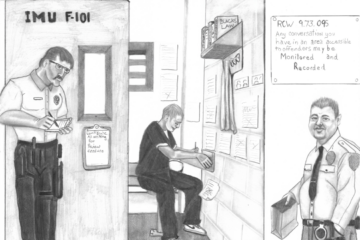
Still Broken recounts the strategic shortcomings in our efforts to defend this country from enemies overseas -- from how the Administration mismanaged the war in Iraq and turned our intelligence efforts into a ineffectual political apparatus to his eyewitness accounts of mistreatment of detainees likely guilty only of being in the wrong place at the wrong time.
Using humor and and intensity in equal parts, the book demonstrates AJ's acute ability to recognize where failures exist, where progress is impeded, and where this country, because of President Bush's failed policies, has fallen off track.
AJ's mission here is clear:
From the beginning of my employment, and for most of my life, I had believed in the system, the government, and the goodness of civil servants, especially those paid to keep us safe. Most of all, I believed that it was better to be a part of the system, even if it was an uphill climb against all the ills of the bureaucracy, than to criticize it from the outside. I generally believe in solving problems quietly and efficiently, and the idea of taking a public stand on principle did not appeal to me. But I also knew that I might have an opportunity, however small, to affect some of the worst elements of the office simply by leaving it. It was no longer a question of whether I wanted to stay, but rather whether I would have the courage to depart.
I for one have deep sympathy for this perspective, and hope that we can all learn from the lessons AJ provides to reconstruct a government that doesn't fail its people but does a job we can all be proud of. The book is insightful, courageous, and important, and I'm pleased to be able to discuss it with you this afternoon.
Without further delay, I'd like to introduce Alex Rossmiller, fellow with the National Security Network, writer at AmericaBlog, and author of Still Broken: A Recruit's Inside Account of Intelligence Failures, From Baghdad to the Pentagon.
Login Here
Share This
Spotlight
zed
Welcome AJ, welcome Richard. It’s great to have you here today.
And AJ, congratulations on your book. Your work at Americablog is always smart and informative. The book is likewise.
It would behoove me to retire for the rest of the day on zeds. I have had more than I deserve for my random lurking. :-)
Welcome Mr. Rossmiller.
What political litmus tests did you have to pass to get the jobs you held in the Bush Administration?
Thank you Richard for the great introduction to AJ’s book. Welcome to FDL. And thanks so much to AJ for writing all of this down. The first time I ever met AJ, I knew this was going to make for a fascinating read — and I was right. It’s well done, if infuriating at times, and a handbook on how not to run the national security apparatus.
Here’s hoping a number of lessons get learned in the read, AJ — but with the current crew, I’m not exactly holding my breath.
AJ and Richard welcome to the Lake.
A big welcome to Americablog readers, too.
Thanks Jane, and everybody — it’s a pleasure to be here, and a privilege to have Richard Clarke as our host. I’m looking forward to a fun discussion, and I appreciate the support of your readers with “Still Broken” and over at AmericaBlog!
Having just finished the book, I would say that Richard has presented a fine synthesis of AJ’s astute analysis.
It’s a pity that folks like you two have found yourselves on the outside of government, when such insight is desperately needed inside it.
Thanks for your book, AJ!
I think this book is a real contribution to the public’s understanding of why the system is not working
Question for both of your guests: Did you ever work out of the Building 7 at the World Trade Center?
As I’ve told Christy before, she was instrumental is helping to bring about the book — I met her at the first YearlyKos conference, before I had even considered writing about my experience, and her support and encouragement helped convince me that it was important to speak up about these issues.
Welcome to both Richard Clarke and AJ.
AJ, I’ve got a question from reading your book. In the lead-up to the Iraq War, INR was the only agency that got it even close to right. But several times in your book you talk about how bad State’s analysis was (you talk specifically about the 2005 Iraq elections, for example). What happened? Was it that Thomas Fingar moved to DNI and with him a lot of the better analysts? Was it Condi’s management? Or did INR just get lucky in the leadup to the Iraq war and get more politicized as time went on?
For both you and AJ — I know it is extraordinarily difficult to have done what you did and now stand on the outside looking inward at folks struggling to do these jobs under enormous pressures to bend their analysis toward a predetermined conclusion. What can we — all of us — do to help the folks still doing these jobs to be able to properly do them?
Seems to me so much of the process has broken down, not just in the WH and the national security leadership, but with Congresional oversight being toothless for so long as well. Are there particular needs that you see that public pressure could be brought to bear on for all our sakes? And, if so, what issues need to be tackled first in your opinions?
Mr. Clarke,
Thanks for coming! I have a question I have been wanting to ask someone in your position for a long time. And, it is actually very serious. How much of an imprint on the “mentality” of espionage and related activities have various forms of recent fiction been. I am speaking specifically of TV shows such as La Femme Nikita and books such as those of Vincent Flynn (also 24). What troubles me about the former two is that, while I enjoy the art/craft (writing, acting) of them, I also know they are playing with my mind (and those of others) by giving legitimacy to torture, “rogue agents” and extra-state control purportedly for the protection of an every vulnerable population. While this may be Frank Rich territory rather than yours, in some ways, I wonder if this also presents a problem for security in encouraging problems that in the end will harm our security (encouraging it to be “still broken”) rather than making things safer.
I also look forward to reading the book.
I was at (or pretty close to) the bottom of the civil service totem pole when I started, so there was no political issue at all. The book doesn’t come at the issue from a partisan stance, exactly, except of course that I think the one-party domination combined with Bush administration failures helped cement many of the intel and foreign relations problems we continue to have today.
Awwww, thanks, AJ. But honestly, I just wanted to hear the whole story. You tell it very well, as infuriating as it is from start to finish.
Since you’re paying us the honor of introducing AJ’s book, I’m wondering if you could pinpoint a day when the intelligence agencies got to the state AJ describes? How much is specific to the Bush Administration and how much is more pervasive?
INR, the little State Department intelligence analysis unit, has a great track record over thirty years. They stand up to the conventional wisdom. I say this because I ran the analysis unit there for four years in the 1980s…but seriously, it is a good organization. Even it is not always right.
AJ, at one point in the book, during your post-Iraq posting at the Pentagon, you describe how you were asked to write up a report saying why you and your office had gotten the Iraq election analysis right when most everyone else was way off base. “Sir, can’t I just say that I copied and pasted Juan Cole?”
I laughed as I read this (and the response you got: “Consult the Wall of Optimism”), but it got me to wondering at how much penetration the analytical blogosphere has in the analytical communities within government agencies. Any guesses, or informed speculation?
Welcome! AJ, would you be interested in returning to intelligence work under an administration that was committed to returning it to its proper function?
That’s actually a very good question. I’m not exactly sure, and I should say that I had relatively little interaction with State outside of one or two particular intel staffers, one of whom, it turns out, was there on loan from DIA. But so much of it depends on leadership that I wouldn’t be surprised if a changeover had a significant detrimental effect. And despite my gripes with State while I was at DIA, I think they continue to do a lot of good work — much of it working against the grain.
Thanks. I asked about the political aspect because we have read so much about people your age who were part of Bremer’s office in Baghdad who were, to use my own phrase, nothing but political groupies. Glad to hear your situtaion was different.
There has been a decline in intelligence analysis since the end of the cold war, but most of it has never been very good. The Bush Administration made it worse by making it clear that real intelligence analysis was not wanted. They already knew the answers.
Welcome A.J. and Richard. Can you describe changes/differences in DIA since Gates replaced Rumsfeld?
Great job on Americablog AJ I enjoy your reading your analysis. Good luck with your book.
Richard really gets at the very heart of my experience (and the story of the book) with this observation — the *answers* were already determined, so the intel was made to fit the predetermined conclusions. Once policy starts driving intel rather than the reverse, you’ve got a tremendous problem, and one that’s ultimately very dangerous for security as well as strategy.
I have appreciated Richard Clarke’s work over 30 years of government service, and his clarifications of Bush distortions/fear mongering over the last seven years including the excellent editorial he wrote on FISA a couple weeks ago:
Bush legacy: Setting a standard in fear-mongering by Richard A. Clarke
24 and these other shows do real damage by legitimizing torture and other techniques. Some people do not really understand that this is fiction and the real world is different. Doing these kinds of things in the real world is counter-productive as well as immoral. A recent poll of West Point cadets showed they thought that doing what was done on 24, torture, was ok.
I’ve got a question for Richard Clarke (emptywheel, shockingly, having more or less preempted another question I had). I just finished reading Shenon’s The Commission, which overall is quite good and interesting, except for the part about Philip Zelikow, which is a hatchet job and still fails. Now, Shenon depicts you as quite upset from start to finish about Zelikow’s role on the Commission, in light, apparently, of his role in the Bush transition and specifically in demoting you. The section of the 9-11 Commission report itself that deals with this episode (from which Zelikow was recused, since he was involved in the episode) gives Rice’s side too indicating that the fact that she kept your team on at all was indicative of the seriousness with which she took counterterrorism, suggesting that excluding you from the Principals Committee level was just for clarity of chain of communication and command. What do you say to that, and can you give details of your interactions with Zelikow during the transition. (I can’t remember if it is in your book, honestly, which I haven’t looked at in a while.) What did he do that might indicate a lack of seriousness about counterterrorism?
Glad to have you both here. Mr. Clarke, what do you think of Huntington’s thesis of a clash of civilizations? Was he being too simplistic or was he very prescient?
Thanks. At least the Democrats in the House had enough courage to leave town without bowing to Bush’s latest scare mongering on FISA. Lets hope they still have spine when they get back.
Mr. Rossmiller,
I haven’t read your book (yet), but had read a lot of others about the intelligence business. One formative one was The Second Oldest Profession by Phillip Knightley, which is primarily a history of MI6 & CIA. But Knightley points out that the fundamental fatal flaw in the spy business is that it is secret. There is no market competition, and no external supervision that can hold its nost to the grindstone. To me, that explains most of the “intelligence failures” and the futility of any reorganization or reform. Furthermore, bad behavior always gets rewarded because the spies claim the failure stems from too few resourcs. So failures lead to bigger budgets.
I think it was over simplified. The problem is that many Americans believed it and it is becoming a self fufilling prophecy. We need to understand that in many parts of the Islamic World there are people who share our values and are creating modern nations.
Greetings A.J. and Richard. It is inspiring to have you here.
Thank you both for giving the American people a record of your experience and advice. What you have to say in invaluable and gives us hope.
True dat! I hope the enjoyed the heady good feeling that comes from sticking up for yourself against a lying asshole bully like Bush, and that they seek to recreate that feeling on a regular basis over the next 11 months. Imagine what a rush it would be for them to impeach the motherfucker?
I have always been mystified by the people who believe that the purpose of intelligence is to “support our policies” (which Porter Goss said when he was appointed, pretty much in so many words) rather than inform what the policies should be. We all have “confirmation bias” toward believing information that supports our existing beliefs, and I can understand why it’s attractive to be told what you want to hear, but not understanding how rejecting contradictory information can bite you in the ass, well, it just makes me wonder how these people managed to get through life up to now.
AJ reprints a stunning email from Rick MacKenzie, a senior intelligence officer, sent on his last day before his retirement. MacKenzie lays out his critique of the system, and also includes five suggestions for moving forward with more wisdom.
The piece of his email that resonated most with me was this:
There comes a point at which those in the senior ranks of the chain of command — whether at DOD, State, or anywhere else — have to trust the work of those closer to the ground. Your story is a tragic tale of what happens when the privilege of rank is used to project biases into intelligence analysis, rather than the reverse.
No surprise here. I remember reading a New Yorker article with the producers of 24, where they met with the DoD and the same objections were raised.
Doesn’t that, i.e., political overseers, explain every major intelligence failure since the CIA was invented? Just one other example: failure to see the downfall of the Soviet Empire was determined by the Reagan administration that wanted it to appear much stronger than it was, so it could look like Reagan slew a dragon, not a mouse.
Why is the exaggeration of terrorism or Iraq’s WMDs any different from what has been routine in the past?
One of the things that the Bush administration has had that our side hasn’t, at least to a large degree, is surrogates on these issues, and the FISA article you cite was *hugely* read in Washington and made a big difference, I think. I should also admit that while I’ve become pretty accustomed to interacting with foreign policy bigwigs from my think tank work, my appreciation for Richard’s work goes wayyy back — as I sit at my desk, I have “Against All Enemies” sitting here, complete with doggy-eared pages, post-its on several passages, and endless margin notes. I read it just as I was starting at DIA, and it’s especially important to remember that it was published long before most people understood just how strategically deficient the administration’s policies were. 2004 was not exactly a great market for Bush critics . . .
It’s a great honor to have you here at FDL.
1. Is there any hope of getting Congress to start holding Bush accountable for the destabilization his invasions have caused throughout the Middle East?
2. Would Democrats get more traction with low information voters if they referred to Iraq and Afghanistan as “occupations.”
3. Is it fair to say that our involvement in Iraq only makes Russia and Iran more dominant in the Middle East?
Thank you so much! This sort of fictional treatment also, in my view, glorifies quick action results, as opposed to the type of pains taking research, which is often boring, mundane, and filled with false leads - that goes into most successful outcomes.
This is for either A.J. or Richard. How did we go so awry? How did intelligence get so entangled with the administration, its appointees and politics? Someone must have seen the danger of this.
Bush will never be held accountable except by history, unfortunately. I have been calling our presence in Iraq an occupation, for about five years now. It does make the point more clearly, you’re right. And also right that we have given Iran most of its objectives by invading and occupying Iraq.
Mr Rossmiller, when did you start at the DIA?
Thanks for taking the time to be here today, A.J. Rossmiller & Richard Clarke.
I read Col. Pat Lang’s blog http://turcopolier.typepad.com....._tyrannis/ daily & wonder if either of you would care to offer your opinion of Col. Lang’s work @ DIA or elsewhere.
If you could have Congress or the next president do one thing and one thing only to imporve the process of intelligence gathering and analysis, what would it be?
I think the surrogate issue is key — and points to how the nested system of think tanks and magazines and other “wingnut welfare” sounding board and echo chamber systems are established to compound their influence across the media and beyond. It was systematically established leading into the Reagan years to magnify their voice publicly, and make it seem as though the more wacky theories had greater support than they actually did.
Digby has dug into that subject matter extremely well, and her work on it ought to get a much wider audience. Foreign policy is one of those premiere areas wherein an enormous amount of effort has been made for decades — Bill Kristol’s father, the Kagans, the list is endless, all supported on the backs of the trust funds of folks like the Scaifes — all for the long-term promotion of their values to the masses.
When you start to unravel the various factions and twisted nesting of giving quotes to the media so that someone else can agree with it, and so on…and then look at how the internal White House PR was done by the WHIG in the lead up to the Iraq invasion? It’s systemic. And how you begin to root out all of that? I wish I knew.
It’s interesting, people who have read the book have really responded to that email from MacKenzie — he’s like the character actor who steals the show in a movie. I felt like it was important to show a more birds-eye view in addition to my ground level experience, and his insights do that perfectly. I should also say that the book doesn’t shy away from my own struggles and mistakes — I dislike the self-serving memoirs that have come out from people who stood with the administration while doing awful things and then absolve themselves of any responsibility, so I was conscious to avoid that kind of perspective.
I think much of it goes to the shut down of analytical functions in the press, the Congress, the bureaucracy, and much of America after 9-11. We all wanted to respond to that outrage. There was a wave of patriotism. And in such an atmosphere it seemed t many to be wrong to question authority. Always question authority.
Question for AJ (not having read the book yet…it just came in the mail):
Do you see this more as a failure of execution (ie. intelligence analysts were co-opted by inside the beltway thinking or their biases) or more of a general failure as a result of a wrong-headed foundation (ie. the Iraq war was wrong in the first place, so these kinds of intelligence failures are inevitable)?
Mahalo, AJ and Richard for taking the time to be here at the Lake!
I find it truly fascinating that McCain can vouch for torture being effective in getting actionable intel… Considering that he was tortured into signing a bogus confession, himself…
Only one? Give the DNI a small, elite analytical staff that can task collection.
And to piggyback–how has DNI helped or hurt our intelligence efforts?
I’d love to have either one of you comment on how the process behind the Iraq NIE was different, and if so, how McConnell managed to pull that off?
Brilliant points Christy. Basically that is what these groups are therefore, and they give legitimacy to out-there voices, which in turn get quoted in MSM papers and television, ping ponging the results.
McCain’s policies on Iraq are dangerously wrong, but you have to give him credit for standing up to Bush on the use of torture. He did the right thing and few people in his party in the Congress joined him.
Christy, I think AJ gave the answer to that in the book:
“There is nothing more dangerous to a controlling and manipulative structure than someone who finds his or her conscience and resolve.“
I believe that those of us on the outside of such structures who shine lights on the manipulations can help stiffen the resolve of those on the inside.
Great line, AJ!
Richard, is it true that you flew to Crawford to make the case that “Bin Laden was determined to strike…”?
This is absolutely right, and it’s the primary reason I went to work for a great organization that is doing a ton to rectify that issue. The National Security Network, run by Rand Beers (Richard’s friend, as he mentions in the intro, and former colleague), is a fantastic, reality-based, progressive organization that has a ton of smarts and legitimacy in this arena. And if I may say, the fact that they hired a blogger like me speaks volumes about their commitment to connecting to the movement instead of just holing up in Washington.
AJ - havent read the book yet, but it’s rising to the top of my “to read” pile. very best wishes on its’ publication, and thanks for all the stimulating posts over at ablog.
Richard - you’re an american hero. thank you for telling the truth.
The DNI reform would help more if that position had real control over NRO, NSA, NGIA. It only works now because McConnell, Clapper, and Hayden get along personally ar nd are struggling to make it work.
McConnell is relatively untouchable by the White House right now.
I don’t understand how the gathering of information can be so difficult especially where events are obviously unfolding. In 1974 I lived in Indonesia. All the Europeans and Berliners there knew the Soviet Union was a shell of itself. It was bankrupt. Only me, the American, had never heard such things. The wall was breached. Many crossed over. I still had “The Spy Who Came in from the Cold” reality. The CIA confuses me.
Ahem, Senator McCain just voted in for torture, i.e., against the banning of waterboarding. (Can’t remember if he actually voted or announced how he would have voted.)
It’s also one of the values of having you point to other progressives in the blogosphere who are doing important work. You pay tribute to Juan Cole (and, not by name, many others) in your book, but I do appreciate your efforts to widen that circle.
Alas, McCain has since flip-flopped and voted against the Army Field manual standards…!
Richard…on that point. Are you aware of any research on methods using non-invasive, non-duress methods of assessment during interrogation. It’s well know that torture will result in the victim saying ANYTHING that will terminate the torture. Innocent people will give false information, and trained individuals will knowingly provided “red herrings”. Methods assessing neural pathway responses (using PETT or CAT-Scans) in a non-stressful environment would be, in my view, far superior to tormenting individuals. Yet billions of dollars are spent on forced remissions, Gitmo (holding people which the military even admits have been detained under false information or confessions made abroad under dubious circumstances) and inaccurate interrogation processes. Yet methods that might actually produce sound intelligence (possibly exonerating) and that would potentially stand up in court are not being explored? Why?
I am glad to say I have never been to Crawford, but CIA briefers did go there and present Bush with the analysis you refer to.
I’d say you succeeded in avoiding a self-serving memoir, AJ. From my own experiences in other bureaucratic institutions, including a stint long ago as a State Dept intern, your writing captured well the struggles of life in a dysfunctional system.
“I think it was over simplified.”
Thanks for your response. I fear that while we focus on terrorism of the Islamic variety, we may be missing the bigger picture of China’s rise and the threat it poses to pax-Americana; which, while certainly flawed, is far better than anything else out there. As we decline economically (temporarily, I hope), the transfer of wealth to China and the oil-rich countries creates a potential threat to the secular, tolerant and humanistic way of life that has evolved in the West. Might there be too much of tunnel vision and a tendency to fight the last war in the manner in which our intelligence agencies operate?
True enough and we need to point out such contradictions, but he was very good on this issue last year.
To piggyback on this with regard to Ian’s question (love Agonist.org, by the way) there’s a weird disconnect between analysts and collectors — especially to the extent that analysts can’t task collection! While I imagine there are some security concerns, there must be a way to bridge that gap. The most effective and efficient experience I had within DIA was when I regularly talked to and met with collectors in Baghdad. It made a huge difference for analysts to help contribute to tasking collection, so I think the DNI suggestion is a great one.
Sir,
What role did a desire to halt China from controlling Iraq’s oil play in the war in Iraq?
As WP notes below- Bush interrupted a chinese play for oil:
SHANGHAI –” Until recently, China’s view of the global energy map focused narrowly on the Middle East, which holds roughly two-thirds of the world’s oil. Special attention was directed toward one well-supplied country: Iraq.
Through cultivation of Saddam Hussein’s government, China sought to develop some of Iraq’s more promising reserves. Beijing advocated lifting the United Nations sanctions that prevented investment in Iraq’s oil patch and limited sales of its production.
Then the United States went to war in Iraq in 2003, wiping out China’s stakes. The war and its aftermath have reshaped China’s basic conception of the geopolitics of oil and added urgency to its mission to lessen dependence on Middle East supplies. It has reinforced China’s fears that it is locked in a zero-sum contest for energy with the world’s lone superpower, prompting Beijing to intensify its search for new sources, international relations and energy experts say.”
Please forgive me, but I am going to go ahead and be silly.
Mr. Clarke, my esteem for you is enormous and my respect is equal to it. You are remarkable for being the validation of a very old fashion sort of thing - a Civil Servant, a public servant - and in the midst of a great deal of rather horrible self-aggrandisement, your knowlege, skills and abilities were extra-ordinarily comforting.
Thanks.
My question for Richard Clarke got skipped over, maybe because it wasn’t clear or maybe because it came off critical of Clarke, which I did not intend, rather than of Shenon’s book, which I did. My question is just this: What did Philip Zelikow do during the 2001 Bush transition exactly that showed a lack of seriousness about counterterrorism?
I should mention that I haven’t had a chance to read the book yet, it arrived on my doorstep Thursday. But I’m very much looking forward to it. It’s completely axiomatic that if you don’t know what’s going on you’re going to make the wrong decisions and that if you don’t want to know what’s going on, well, that you don’t wnat to make the right decisions. And figuring out how intelligence went wrong and how to fix it is incredibly important. I also tend to feel right now that the US is getting very little value for its money in its intelligence services. A while back I read (don’t know if its true, but wouldn’t be surprised) that US intelligence services spend about half as much as the entire Chinese military.
A hard head has to look at that and ask “and what, exactly, is it getting for this? Relying on foreign (not domestic) newspapers seems to give as good or better intelligence than the US intelligence services over the last 6 years…”
Okay Richard I know it’s a bit off-topic but I have to ask. Did Patrick Fitzgerald’s footnote about you and Tim Russert make you smile as much as it did me?
One of my favorite moments of Plame.
Aren’t the odds fairly slim that the DNI would get that sort of control while Dick Cheney sits in the Veep’s chair? Didn’t he and Rumsfeld fight tooth and nail to keep any of the Pentagon intel ops out of the DNI’s oversight potential?
Mr. Rossmiller (or Mr. Clarke): Since Mr. Clarke was kind enough to answer my last (out there but serious) question (and well) I have another for you. Alas, this is the sort that may get me in trouble with friends here at th Lake but here it is: From my vantage, like the cold war, which was framed largely around issues of ideology (capitalism vs communism), the current M.E. crisis also seems to be fueled by deep seated ideological issues (fears for Israel very existence), thinking that seems to encourage too often measures (responses) that may be (often are) out of synche with viable security engagements (for them and for us). How hard is it to separate the ideology from the on the ground situation? Do you see a way out of this.
Believe it or not, the FBI interrogation procedures are often pretty good. But as to CT scans and technology, I am a little dubious. Research, however, is certainly worthwhile as long as it doesn’t take us down the road to Big Brother.
Speaking of actionable intel, can either of you explain why they didn’t send in the Ranger Battalion to Tora Bora when they had the golden opportunity as related in ‘Jaw Breaker’…?
I remember the quirky –”24 and America’s Image in Fighting Terrorism: Fact, Fiction or Does It Matter?”
Heritage Foundation Panel aka love-in with the actress who plays Chloe, Rush Limbaugh, Justice Thomas, and Laura Ingraham his former law clerk.
Well there are supposedly ways for analysts to task collection, but they don’t work 99% of he time. Fixing that would be a huge step forward in improving analysis.
Richard, were you aware (at the time) that Condi Rice had been given an extensive briefing by George Tenet and Cofer Black on the likelihood of an al Qaida attack on US targets in July of 2001?
Well certainly I thought (and obviously continue to think) the war in Iraq was a huge strategic mistake, but I think that the process of intelligence should still work even in the face of a problem like that. And it’s not like analysts weren’t trying — we really did predict many of the problems that ultimately occurred over the past three or four years, but *many* of those papers were either edited significantly as they went up the chain of command or simply given a sort of pocket veto — they’d be held up until they were no longer “timely.” So I think much of it is in the execution.
General Tommy Franks and his deputies wanted at all costs to avoid getting caught in what happened to the Soviets in Afghanistan. That is the rational they used to go into Afghanistan with only a light force. Franks never understood the mission was to get al Qaeda not to take don the Taliban and occupy the seat of government.
I was in the room when they did so in the White House, had urged them to do the briefing.
And I suspect, ironically, that that same echo chamber is partially responsible for its participants’ mentality that the intelligence (and other facts) should serve their predetermined answers. Wingnut welfare was created to look like a facade of academia when real academia wasn’t producing the answers they wanted. In contrast to a real contest of ideas and theories, it’s an exercise in cherry-picking information to justify preferred conclusions, and to succeed there you don’t have to make solid arguments, just end up at the right place.
That’s bad enough as a propaganda exercise, but it seems that a lot of them convinced themselves that they really were doing the same thing as real academics, which is part of what produced this great disaster when they took power and their ideas finally had contact with the real world.
I watched 24 for part of season 2 or 3, then I heard the DOD had some thing to do with it and I knew it was just more brainwashing and I quit watching it.
So I ask again. Was anything different this time? Presidents have routinely make the intelligence agencies exaggerate foreign threats to that they can look like giant slayers rather than pigmy slayers. Reagan & Soviet Union another example. I think what Bush did was SOP. And you?
Granted that’s why the Rangers were on tap, but, when they had Bin Laden holed up in one specific valley, wouldn’t it have made sense…?
That is the hope, at the very least. Intelligence professionals are supposed to be just that, professionals. Again, haven’t read the book yet, but if the intelligence community has the potential to overcome the basic mistakes of the premise of the Iraq war in the first place, that almost makes me feel better about the whole mess…
I think a lot of the confusion regarding these issues is due to a category error, the assumption that those in power actually want the intelligence apparatus to work as originally designed. If one simply realizes that the Bush admin regards all information as propaganda, and that they have a policy agenda that would not be supported by the electorate in the absence of propaganda, then there is no confusion. IOW, it’s not that they “can’t handle the truth”, it’s that they don’t want the truth known by the public.
Overly simplistic? Maybe I have listened to too many Bush speeches :-)
In the book, you describe going with an action team in Iraq to witness the field interrogations and processing of those rounded up as a result of something your intelligence team suggested. The disconnect you describe between the folks in the field who grabbed this particular group of Iraqis and those who would then deal with them at Abu G. was stunning. The folks in the field, getting nothing from their captives after trying to verbally beat them down, shrugged and said “the folks at Abu G will sort out the insurgents from the innocents,” and you lamented that the people at Abu G operated with exactly the opposite assumption: “These guys wouldn’t have been sent to us if they weren’t guilty.”
Somehow, breaking down that kind of disconnect between the frontline and the folks behind them seems critical.
Actually, the New Yorker article said the DoD met with the producers of 24 to ask them to tone things down and make it more realistic. The producers didn’t seem to into the suggestion…
There were lots of motivations among Bush and his Vulcans for going to war with Iraq. Oil was only one of them, although it ranked high on the list of reasons for Cheney. I don’t know that the competition for access to oil vis a vis China ever was raised specifically in the Iraq context.
Parenthetically, Harriet Myers was there that day too not saying she read it or was involved or anything but the pic was taken Aug 8 2001
Here’s the memo if anyone’s forgotten what it said
I wasn’t around during the Cold War (literally, for the most part) but keep in mind that my experience was being pressured to *understate* the problems, not exaggerate them. We’d say things were going badly, and we’d be told to say they were going well. I take your point that the intelligence community has been used improperly by the executive branch in the past, but my colleagues overwhelmingly talked about these issues mostly being created under this administration. And certainly I think the amount of misdirection about the Iraq war has been pretty unprecedented.
Absolutely it would have made sense to send the Rangers after bin Ladin. He thought he was done for, pretty much said so on his walkie-talkie to his remaining troops. But Bush would never let anyone in the White House second guess the military. He didn’t do his job of civilian control and oversight.
Just by way of example, here’s AJ’s description of the response to what I presume to be (I’m guessing) his analysis that Chalabi and Allawi weren’t going to win the 2005 Iraq elections: