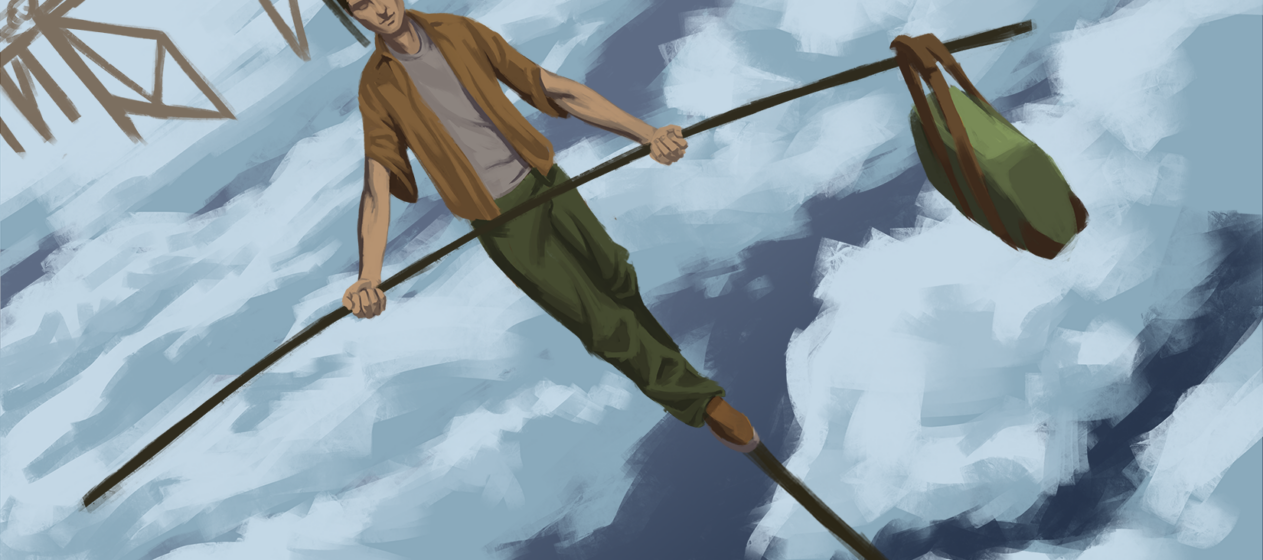

rovenovak.jpg 

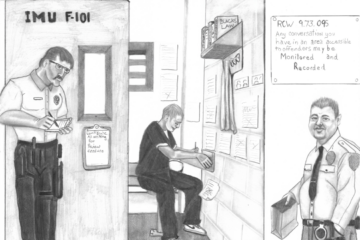
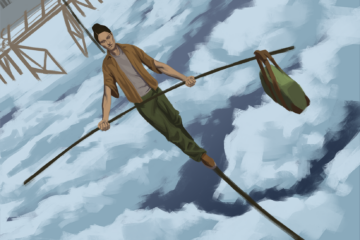
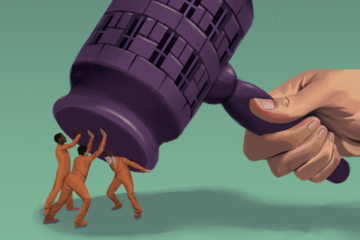
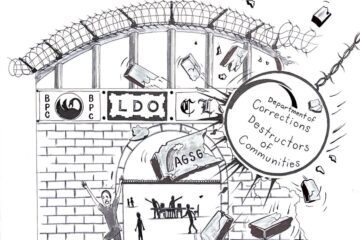
[After enjoying his comments for the last few years on FDL and at Next Hurrah, we are thrilled to welcome Jeff to the front page of FDL.  Welcome, Jeff!  And a huge note of thanks for this brilliant, satirical artwork above to The Candorville Courier.  Made me laugh out loud this morning.  -- CHS] 

I am very pleased to have the chance to guest post here in the midst of the very best Plame bloggers. I may have higher regard for the Washington press corps than a lot of people who post here, but there can be no question that the liveblogging that the incomparable Marcy Wheeler and Swopa, bloggers with a fuller, closer understanding of the case than any reporter could possibly have, have been doing is itself an event, as Rick Perlstein recently pointed out.

I have always been interested in the CIA leak case less because of who would end up being charged with crimes than what it would enable us to learn about the response of the Bush administration to the searing controversy over the prewar intel in summer 2003 and, beyond that, about how the administration mounted its public justification for war in the first place back in late 2002-early 2003. This matters for at least two reasons: because factual truth is both a powerful tool in politics, and one that is easily crushed and therefore that requires vigorous defense; and because it may help us to stop future disasters of the kind that the Bush administration’s conduct of the Iraq war has been.

It’s clear that Libby’s trial will not give us a complete picture of what happened; but it is certainly adding considerably to our knowledge. It is fun to watch numerous rightwing talking points both about Patrick Fitzgerald’s investigation and about the dispute over prewar intel in July 2003 crumble as evidence in the case becomes public. My favorite amusing just-disclosed evidence is an internal email from the Office of the Vice President from September 2003, just as the investigation was being announced and initiated, that gives the lie to one of the rightwing’s talking points in defense of the administration and of Karl Rove in particular: that they were not really leaking – that Rove did not really leak to both Bob Novak and Matt Cooper – because the reporters called them, not the other way around. Here is Libby’s aide Jennifer Mayfield emailing Cheney press aide Cathie Martin about some things Libby wanted to make sure Martin saw (from ABC’s The Note):

And we really don’t like to fight with Bob Novak – besides being a fellow journalist and Terps fan, he is our hero.

But we don’t understand why

1. Bob thinks it matters that he was told the name of Wilson’s wife in a conversation he initiated, as he claimed yesterday. It is a classic political hit strategy, Bob, to take the call from the reporter, and work the negative information into the call.

This is, of course, just what Rove did with both Novak and Cooper. And it is what Libby did with Matt Cooper, after strategizing with Vice President Cheney. Never mind that the more significant leak from Libby to Judith Miller on July 8 took place at a meeting arranged by Libby himself, at the behest of Cheney and, to some extent, of President Bush himself.

There are also more significant disclosures from the evidence, and they amply illustrate that OVP was incapable of refraining from mixing much falsehood and twisted information with the elements of truth that bolstered its case in summer 2003. To take but one example, they repeated, as a chief talking point, a falsehood that Wilson reported that an Iraqi delegation had traveled all the way to Niger in 1999 just to discuss expanding commercial relations – clearly code, Libby was still arguing before the grand jury, for purchasing uranium. They sought to show, of course, that Wilson’s own report supported the administration’s case, and that therefore Wilson was a snake, as Mary Matalin put it with so much class.

In fact, however, there is no such assertion in the trip report from Wilson’s mission, as one can see from the copies of it, replete with vigorous underlining by Libby, entered into evidence at the trial. Instead, there was a much more casual meeting on the sidelines of an Organization of African States meeting in the middle of 1999 – a meeting where, once again, there was not one word spoken about uranium. That’s not much in the way of vigorous pursuit – which is why, furthermore, Wilson’s information was not in fact included as evidence for the October 2002 NIE’s claim about Iraq’s pursuit of uranium abroad, contra another suggestion Libby repeatedly sought to make. This is ground that eRiposte has been tilling to great effect for a while. What is new is to see just how central it was to OVP’s pushback against Wilson.

Perhaps most depressingly, this talking point continued to live on, to the point that it was repeated in the Senate Select Committee on Intelligence’s report on prewar intelligence, including by none other than one of the CIA debriefers who produced the report based on Wilson’s trip which made no such assertion, as well as by CIA and DIA analysts! (It’s on p. 46 of the report.)

The failures of the SSCI point to the need to revisit its treatment of the prewar intelligence. But the points I made in opening – about vigorously insisting on factual truth in politics on past events and present ones – are also nicely illustrated by two important developments today.

The first is the release of another report on the prewar twisting of intelligence, this one the Defense Department’s Inspector General’s report on the Office of Special Plans, which was located in Doug Feith’s Policy shop in the Pentagon. All signs point to a vigorous effort by Feith and his allies to whitewash the illicit intelligence activities of the OSP. We can’t let that happen.

The second is the step taken by Secretary of Defense Robert Gates today to further assert the administration’s case for the nefarious role of Iran in Iraq. The public case-making has been delayed several times, and we have yet to see the evidence. When we do, we must pay careful attention both to its quality and to the way it is being used, and ask questions such as why the evidence gathered in the arrest of several Iranians in a December raid of Abdul Aziz al-Hakim’s compound in Baghdad, initially declared a smoking gun, appears to have been pulled back altogether. And we must ask whether the Bush administration’s outlook on Iran-in-Iraq was changed by the retreat from that evidence; if not, it means the intelligence, even the true intelligence, is being fixed around the policy once again. And if we are not vigorous about this, we are sure to end up in yet another disaster of the Bush administration’s making.

Related posts:

  1. SCOTUS Denies Valerie Plame Wilson Her Day in Court
  2. The Taxpayers Paid Dick Cheney’s Personal Defense Attorney to Obstruct Any Inquiries Into His Crimes
  3. The Secrets Novak Took to the Grave
  4. Cheney Refused to Release the Journalists
  5. Cheney’s Betrayal Made an IIPA Charge for Libby Possible